Intermittent Fasting Meal Plan — AI Meal Plans for Your Eating Window
Personalized AI-generated meal plans that fit your full day of nutrition into your eating window. 16:8, 18:6, 20:4, or OMAD — your macros, your schedule.
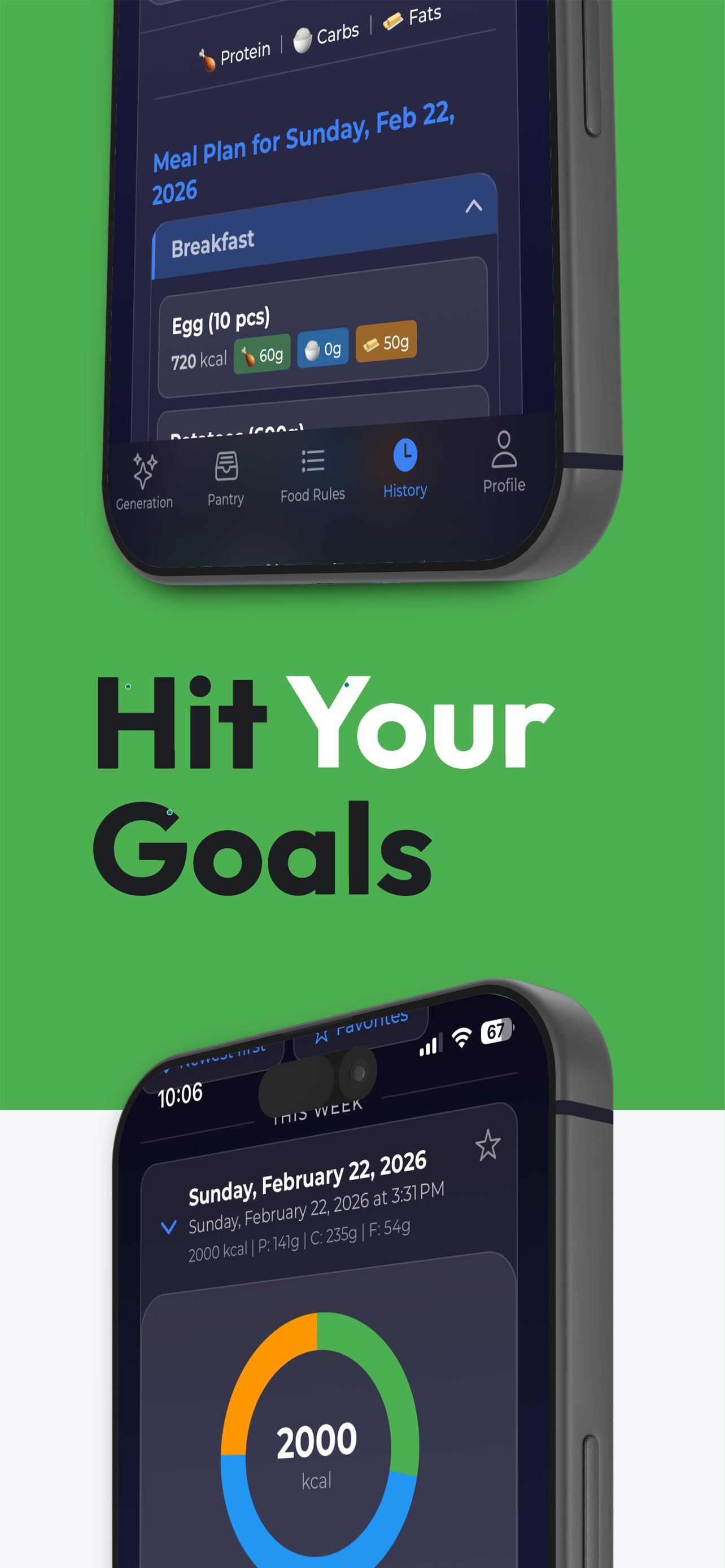
TL;DR: Set your calorie and macro targets, tell the AI how many meals you want in your eating window, and generate a personalized meal plan from your pantry. Every plan hits your daily targets — no calorie counting, no spreadsheets, just follow the plan during your window.
What Is Intermittent Fasting?
Intermittent fasting (IF) is not a diet — it's a meal timing strategy. You cycle between periods of eating and fasting, restricting all your daily calories to a specific eating window. During the fasting period, you consume zero calories (water, black coffee, and tea are fine).
The most popular approach is 16:8 — fast for 16 hours, eat within an 8-hour window. For example, skip breakfast and eat between 12 PM and 8 PM. But there are several schedules ranging from mild (14:10) to aggressive (OMAD — one meal a day).
IF works for weight loss because it naturally reduces calorie intake — fewer hours to eat means fewer opportunities to overeat. But it's equally effective for muscle building and body recomposition when paired with proper nutrition. The science is clear: total daily intake matters more than meal timing. IF simply makes it easier to control that intake.
The hard part? Fitting all your protein, carbs, fats, and calories into a compressed window without over- or under-eating. That's exactly what a personalized AI meal plan generator solves.
How Qedamio Works for Intermittent Fasting
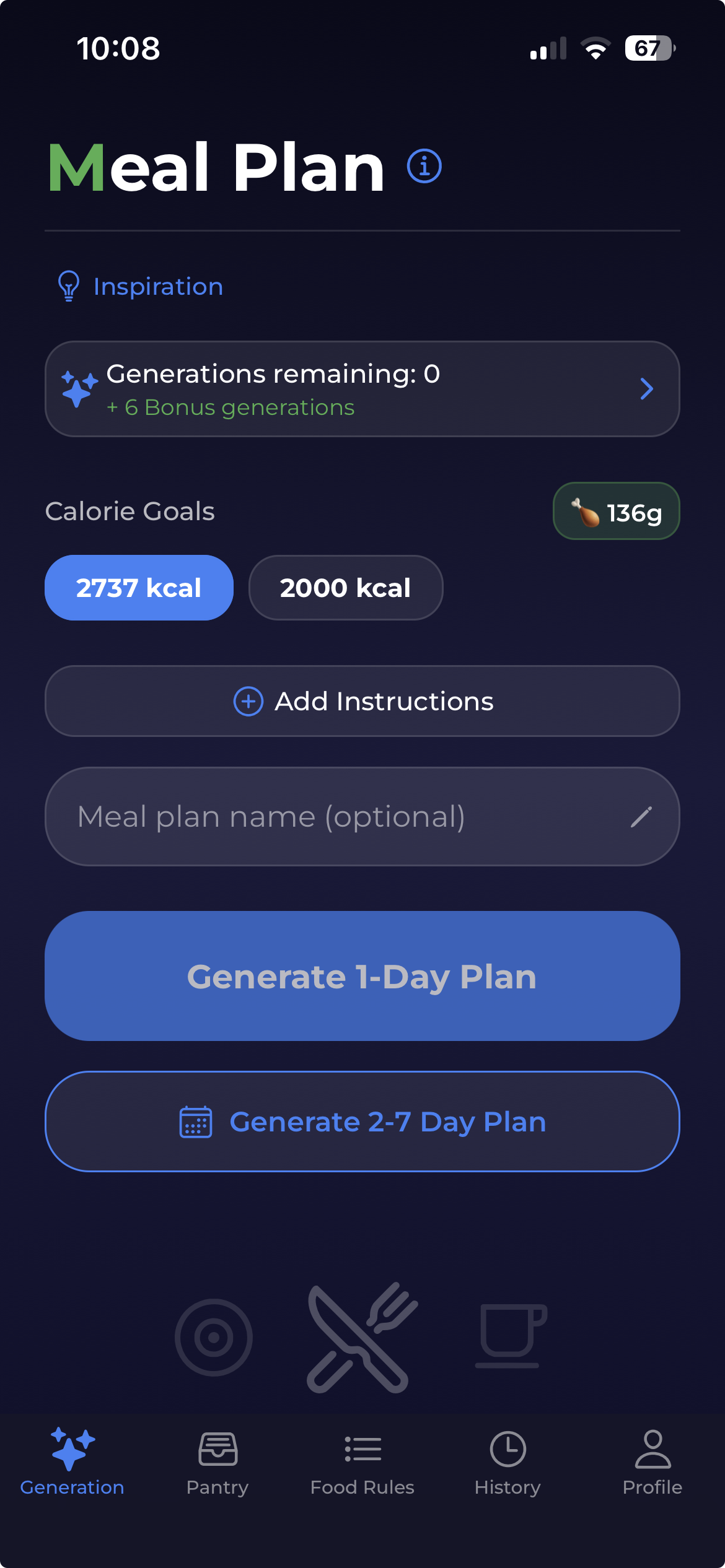
- Set Your Macros: Use the built-in macro calculator to find your daily calories, protein, carbs, and fat targets. Whether you're in a calorie deficit for fat loss or a surplus for muscle gain — set it once.
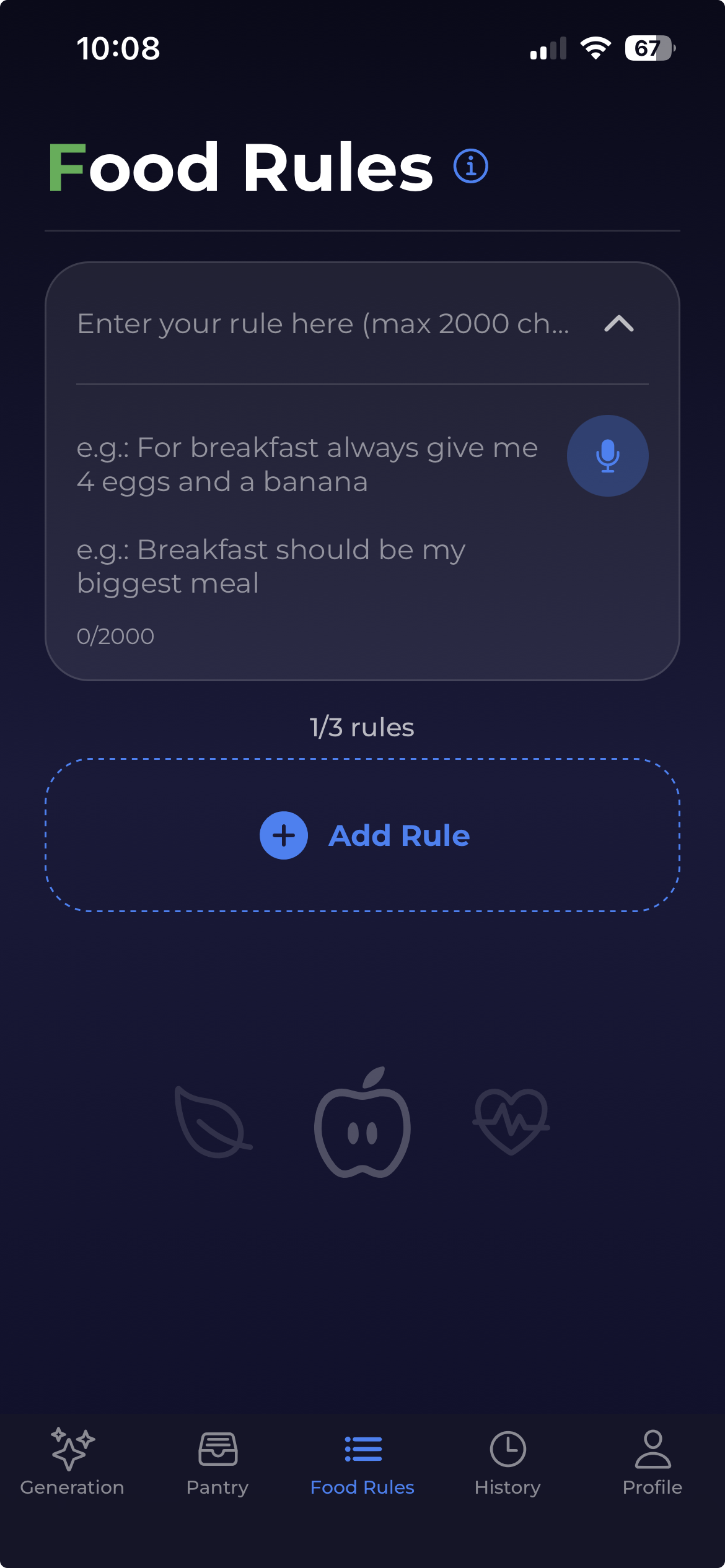
- Add Food Rules for IF: Create rules like "2 meals only", "large lunch and large dinner", "no snacking", or "minimum 40g protein per meal". The AI follows these rules every time it generates a plan.
- Stock Your Pantry: Add the foods you have at home. The AI uses strictly these items — it never invents ingredients. More variety = better meal plans.
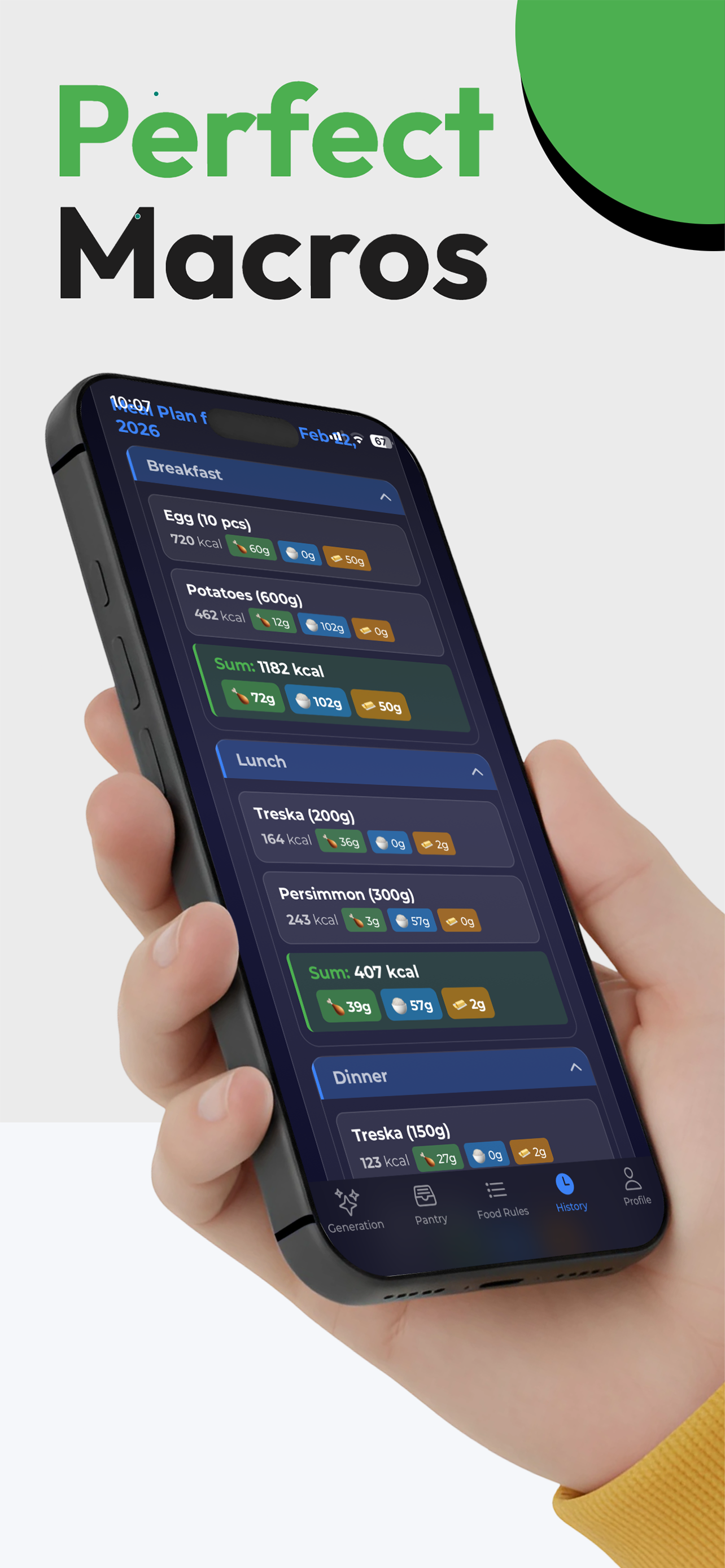
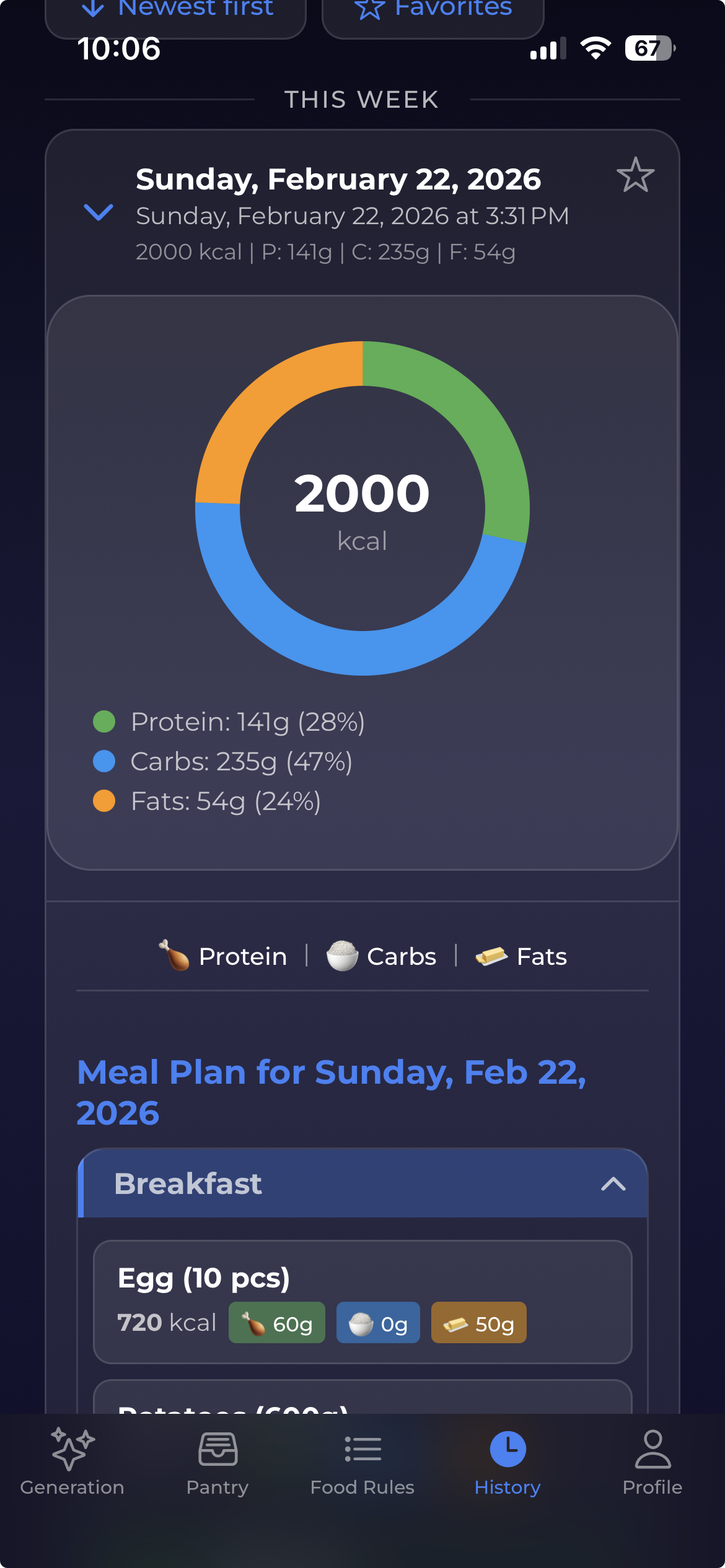
- Generate: Get a complete day of meals with exact portions, per-meal macros, and quick prep instructions. Every meal fits within your eating window and the day's totals hit your targets precisely.
Popular Intermittent Fasting Schedules
There's no single "best" IF schedule — the right one depends on your lifestyle, goals, and how your body responds. Here are the most common approaches:
| Schedule | Fasting | Eating Window | Typical Meals | Best For |
|---|---|---|---|---|
| 14:10 | 14 hours | 10 hours | 3 meals | Beginners, easy transition |
| 16:8 | 16 hours | 8 hours | 2–3 meals | Most popular, sustainable long-term |
| 18:6 | 18 hours | 6 hours | 2 meals | Faster fat loss, intermediate |
| 20:4 | 20 hours | 4 hours | 1–2 meals | Aggressive fat loss, experienced |
| OMAD | 23 hours | 1 hour | 1 meal | Maximum simplicity, advanced |
| 5:2 | 2 days/week | 5 normal days | Varies | Flexibility, weekly approach |
Starting out? Begin with 16:8. Skip breakfast, eat your first meal at noon, finish dinner by 8 PM. It's the easiest to maintain and still delivers results. Once it feels natural (usually 1–2 weeks), you can shorten the window if you want faster progress.
Why AI Meal Planning Works for Intermittent Fasting
Macro Precision in a Compressed Window
Fitting 2,000+ calories and 150g+ protein into 2–3 meals requires precise portioning. A meal plan app with built-in macro tracking calculates exact amounts of each food so your daily totals are on target — not just "close enough". This matters most when you have fewer meals to work with.
Calorie-Dense Meals Without Guesswork
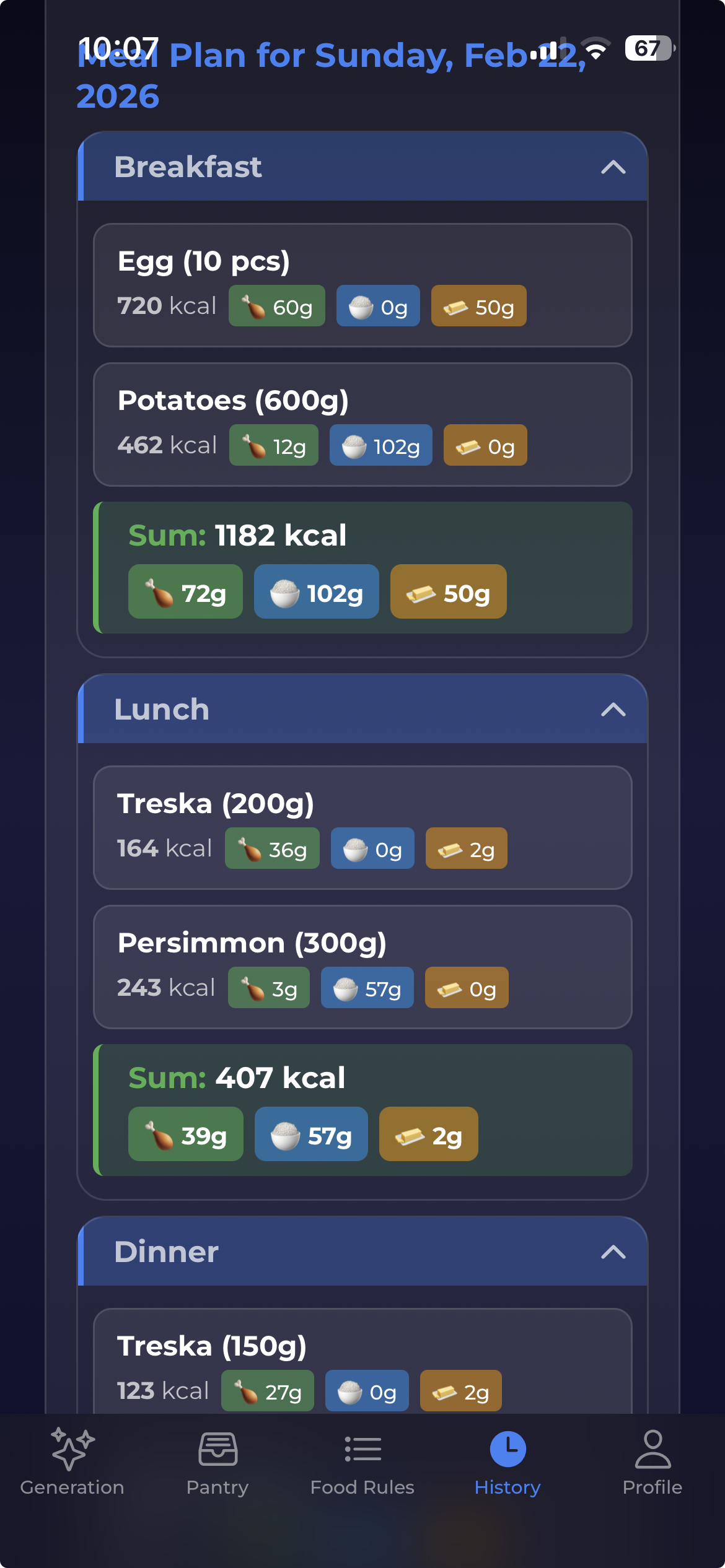
With a shorter eating window, each meal needs to carry more calories. The AI naturally builds larger, calorie-dense meals by combining proteins, fats, and carbs from your pantry. No need to manually calculate whether your lunch is "big enough" — the AI handles the math.
Protein Distribution Across Fewer Meals
Research suggests distributing protein across meals (20–40g per meal) optimizes muscle protein synthesis. With only 2–3 meals, hitting your protein target in each one is critical. The AI ensures every meal in your window has adequate high protein content — no meal is left light on protein while another is overloaded.
Food Rules Lock In Your IF Style
Qedamio's Food Rules are what make IF planning automatic. Set rules once and they apply to every plan you generate:
- "2 large meals only" (for 18:6 or 20:4)
- "First meal must be high protein" (to break the fast properly)
- "No liquid calories" (common IF rule)
- "Include healthy fats in every meal" (for satiety during fasting)
- "Maximum 3 meals, no snacks" (for 16:8)
Strictly Your Pantry — Nothing Invented
The AI uses only foods from your pantry. This means every meal plan is immediately actionable — you already have everything you need. No recipe hunting, no grocery runs, no excuses to break your fast early.
Try IF Meal Planning for Free
Set your eating window rules, add your foods, and generate your first intermittent fasting meal plan in under a minute. 7 free plans included. No credit card required.
What to Eat During Your Eating Window
What you eat matters more than when you eat. IF amplifies the effects of good nutrition — but it can't fix a poor diet. Focus on nutrient-dense, satiating foods that keep you full through the fasting period.
Prioritize Protein
Protein is the most satiating macronutrient and essential for preserving muscle during fat loss. Aim for 1.6–2.2g per kg body weight daily. With fewer meals, each one needs to be protein-rich. Stock your pantry with high-protein foods: eggs, chicken breast, Greek yogurt, fish, lean beef, cottage cheese, and whey protein.
Include Healthy Fats
Fats slow digestion and extend satiety — critical when your next meal is hours away (or tomorrow). Avocado, olive oil, nuts, seeds, fatty fish, and cheese are excellent choices. If you combine IF with keto, fats become your primary energy source.
Choose Complex Carbs
If your macro plan includes carbs, choose slow-digesting sources: oats, sweet potatoes, brown rice, quinoa, and legumes. These provide sustained energy and keep blood sugar stable. Save simple carbs (fruit, white rice) for your post-workout meal if you train during your eating window.
Load Up on Vegetables
Vegetables add volume and fiber with minimal calories. This is especially important during IF — larger meals feel more satisfying. Spinach, broccoli, cauliflower, peppers, mushrooms, and zucchini are all excellent high-volume, low-calorie options.
Pro tip: Your first meal after fasting doesn't need to be small. Research shows no digestive benefit to "easing in" with a light meal. Break your fast with a full, protein-rich meal. The AI generates properly portioned meals — trust the plan.
Intermittent Fasting for Weight Loss, Muscle Building & Cutting
IF for Weight Loss
IF + calorie deficit is one of the most effective fat loss combinations. The restricted eating window makes it naturally harder to overeat, and fasting periods increase fat oxidation. Set a 300–500 kcal deficit below your TDEE, keep protein high (2.0g/kg+), and let the AI build your meals. Use the macro calculator to find your exact targets.
IF for Muscle Building
Yes, you can build muscle on IF. The key is a calorie surplus (200–300 kcal above TDEE) and adequate protein distributed across your eating window. A 16:8 schedule with 3 high-protein meals works well. For a full bulking approach, the AI can generate 3,000+ calorie plans that fit within your window.
IF for Cutting
Combining IF with a cutting diet is popular among bodybuilders and athletes. The fasting period helps with appetite control during aggressive deficits. Set protein to 2.2g/kg+ to preserve muscle, reduce carbs moderately, and let the AI handle the portion math across your 2–3 meals.
IF for Busy Schedules
One of IF's biggest practical benefits: fewer meals = less cooking and planning. If you're a busy person, a 2-meal IF plan means you only prep twice. Combine with multi-day meal prep and you can batch-cook your entire eating window in one session.
Common IF Mistakes — And How AI Prevents Them
1. Not Eating Enough During the Window
Many IF beginners undereat because they can't fit enough food into fewer meals. This leads to muscle loss, low energy, and eventual binge eating. The AI calculates exact portions to hit your calorie target — every plan is nutritionally complete, even with just 2 meals.
2. Neglecting Protein
With only 2–3 meals, it's easy to fill up on carbs and fats while falling short on protein. The AI prioritizes your protein target and distributes it evenly across meals, ensuring you hit 1.6–2.2g per kg body weight no matter your schedule.
3. Breaking the Fast with Junk
Hunger after a long fast can lead to poor food choices. When you have a pre-built meal plan ready, there's no decision to make. You know exactly what to eat and how much — no willpower required.
4. Eating the Same Meals Every Day
Repetition kills adherence. The AI generates different combinations from your pantry each time, keeping your eating window interesting without any planning effort on your part.
5. Overcomplicating the Schedule
Some people overthink IF — worrying about exact eating times, meal spacing, or nutrient timing. The research is clear: total daily intake drives results, not precise timing within your window. Pick a schedule, set your macros, generate your plan, and follow it. Use a weekly planning approach for consistency.
Key Takeaways:
• Intermittent fasting is a meal timing strategy, not a diet — it works with any eating pattern (keto, high-protein, balanced).
• The 16:8 schedule (skip breakfast, eat 12 PM–8 PM) is the best starting point for most people.
• Total daily intake matters more than meal timing — hitting your macros within the eating window is what drives results.
• AI meal planning removes the hardest part of IF: fitting all your protein, carbs, and fats into fewer meals with exact portions.
• Protein is critical — aim for 1.6–2.2g per kg body weight, distributed evenly across your eating window meals.
Frequently Asked Questions
How does AI help with intermittent fasting meal planning?
AI generates complete meal plans that fit all your daily calories and macros into your chosen eating window. Whether you eat in 8 hours (16:8) or 4 hours (20:4), the AI distributes meals and portions so you hit your protein, carb, and fat targets without overeating or undereating during your window.
What is the best intermittent fasting schedule for beginners?
The 16:8 method is the most popular starting point — you fast for 16 hours and eat within an 8-hour window (e.g., 12 PM to 8 PM). It's easy to follow because you simply skip breakfast. Once comfortable, you can progress to 18:6 or 20:4 for more aggressive fat loss.
Can I build muscle while intermittent fasting?
Yes. Muscle building requires adequate protein (1.6–2.2g per kg body weight) and a calorie surplus — the timing matters less than total daily intake. Set your protein and calorie targets, and the AI will distribute high-protein meals across your eating window to support muscle growth.
How many meals should I eat during my eating window?
It depends on your window length and calorie needs. For 16:8, most people eat 2–3 meals. For 20:4, 1–2 larger meals work better. For OMAD, it's one large meal. The AI generates the right number of meals based on your rules and calorie target.
Will I lose muscle during the fasting period?
No, not with proper nutrition during your eating window. Research shows that intermittent fasting does not cause more muscle loss than traditional dieting when protein intake is adequate. The key is hitting your daily protein target within your eating window.
Can I combine intermittent fasting with keto or other diets?
Absolutely. Intermittent fasting is a meal timing strategy, not a diet — it works with any eating pattern. Use Food Rules to set dietary restrictions (keto, low-carb, high-protein, etc.) and the AI will generate meal plans that follow both your IF schedule and your diet.
References
- Tinsley GM, La Bounty PM. "Effects of intermittent fasting on body composition and clinical health markers in humans." Nutr Rev. 2015;73(10):661-674.
- Moro T, et al. "Effects of eight weeks of time-restricted feeding (16/8) on basal metabolism, maximal strength, body composition, inflammation, and cardiovascular risk factors in resistance-trained males." J Transl Med. 2016;14(1):290.
- Schoenfeld BJ, Aragon AA, Krieger JW. "Effects of meal frequency on weight loss and body composition: a meta-analysis." Nutr Rev. 2015;73(2):69-82.
- de Cabo R, Mattson MP. "Effects of Intermittent Fasting on Health, Aging, and Disease." N Engl J Med. 2019;381(26):2541-2551.
- Aird TP, Davies RW, Carson BP. "Effects of fasted vs fed-state exercise on performance and post-exercise metabolism: A systematic review and meta-analysis." Scand J Med Sci Sports. 2018;28(5):1476-1493.
- Varady KA, et al. "Clinical application of intermittent fasting for weight loss: progress and future directions." Nat Rev Endocrinol. 2022;18(5):309-321.
← Back to AI Meal Planner · Related: Weight Loss Planner · Calorie Deficit Plan · High Protein Planner · Keto Meal Planner · Macro Meal Planner · Cutting Diet Planner · Vegan Meal Planner
Disclaimer: This article is for informational purposes only and does not constitute medical or nutritional advice. Intermittent fasting may not be suitable for everyone. Consult a qualified healthcare professional before starting any fasting protocol, especially if you are pregnant, nursing, diabetic, have a history of eating disorders, or take medication that requires food intake.