Calorie Deficit Meal Plan — Lose Fat the Smart Way
Calculate your TDEE, set a sustainable deficit, and get AI-generated meal plans that hit your calorie and macro targets from your own pantry.
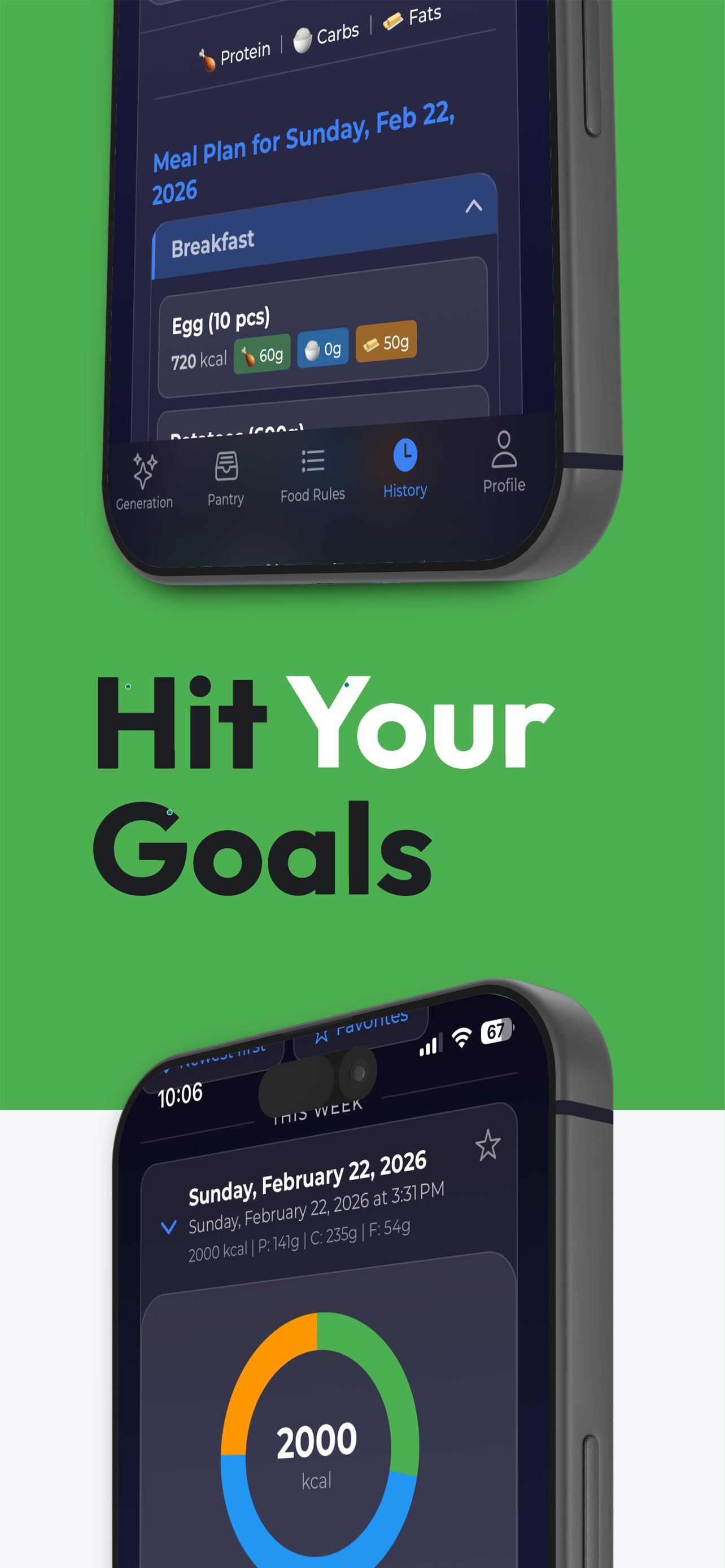
TL;DR: A calorie deficit means eating fewer calories than your body burns (TDEE). A moderate deficit of 300-500 kcal below your TDEE is the safest, most sustainable way to lose fat while preserving muscle. Qedamio's AI calculates your deficit and generates meal plans from your pantry.
What Is a Calorie Deficit?
A calorie deficit occurs when you consume fewer calories than your Total Daily Energy Expenditure (TDEE). This forces your body to use stored energy — primarily body fat — to make up the difference. Over time, this consistent energy gap leads to fat loss.
The math is straightforward: deficit = TDEE minus intake. Since approximately 1 lb (0.45 kg) of body fat contains roughly 3,500 kcal of stored energy, a daily deficit of 500 kcal translates to about 1 lb of fat loss per week. A more moderate 300 kcal deficit yields roughly 0.6 lb per week — slower, but more sustainable and better for preserving muscle.
The key is finding the right balance: a deficit large enough to produce meaningful fat loss, but small enough to maintain energy, performance, and muscle mass. That is where calculating your TDEE becomes essential.
How to Calculate Your TDEE
TDEE (Total Daily Energy Expenditure) is the total number of calories your body burns in a day, including everything from breathing and digestion to walking and exercise. Calculating it is a two-step process.
Step 1: Calculate Your BMR (Basal Metabolic Rate)
BMR is the number of calories your body needs just to stay alive at complete rest. The Mifflin-St Jeor equation is the most widely accepted formula:
Men: BMR = 10 x weight(kg) + 6.25 x height(cm) - 5 x age - 5
Women: BMR = 10 x weight(kg) + 6.25 x height(cm) - 5 x age - 161
Step 2: Multiply by Activity Factor
Your BMR only accounts for rest. To get your TDEE, multiply by an activity multiplier that reflects your daily movement and exercise:
- Sedentary (desk job, no exercise): BMR x 1.2
- Lightly active (1-3 days/week exercise): BMR x 1.375
- Moderately active (3-5 days/week exercise): BMR x 1.55
- Very active (6-7 days/week exercise): BMR x 1.725
- Extremely active (physical job + daily exercise): BMR x 1.9
Worked example: 30-year-old male, 80 kg, 180 cm, moderately active (gym 4x/week).
BMR = 10(80) + 6.25(180) - 5(30) - 5 = 800 + 1,125 - 150 - 5 = 1,770 kcal
TDEE = 1,770 x 1.55 = 2,744 kcal/day
A 500 kcal deficit would mean eating ~2,244 kcal/day for roughly 0.45 kg fat loss per week.
Setting Your Calorie Deficit
Not all deficits are created equal. The size of your deficit determines how fast you lose fat — but also how much muscle you risk losing and how sustainable the diet feels. Here is a breakdown:
| Deficit Level | Daily Deficit | Weekly Fat Loss | Best For |
|---|---|---|---|
| Mild | 200-300 kcal | ~0.2-0.3 kg/week | Beginners, minimal muscle loss |
| Moderate | 300-500 kcal | ~0.3-0.5 kg/week | Most people, sustainable |
| Aggressive | 500-750 kcal | ~0.5-0.75 kg/week | Experienced, short-term cuts |
| Very Aggressive | 750-1000 kcal | ~0.75-1 kg/week | Contest prep only, muscle loss risk |
Warning: Deficits larger than 750 kcal significantly increase the risk of muscle loss, metabolic adaptation, hormonal disruption, and diet burnout. For most people, a moderate deficit of 300-500 kcal is the sweet spot — fast enough to see results, sustainable enough to stick with.
Sample Calorie Deficit Meal Plans
These examples show approximate macro splits for common calorie targets during a deficit. Protein is kept high (2.0g/kg) to preserve muscle mass. The exact foods and portions depend on your pantry — Qedamio's AI handles that part.
1,500 kcal Deficit Plan
Best for smaller individuals (under 65 kg) or those with a lower TDEE. Approximate macros: 130g protein, 150g carbs, 45g fat. At this calorie level, every meal needs to be nutrient-dense. Protein sources should be prioritized at every meal to prevent muscle loss. This is not appropriate for larger or very active individuals — check that 1,500 kcal does not fall below your BMR.
1,800 kcal Deficit Plan
A common target for moderately active women or smaller men during a cut. Approximate macros: 150g protein, 180g carbs, 55g fat. This level provides enough energy for daily activity and moderate exercise while maintaining a meaningful deficit. There is enough room for 3-4 satisfying meals with adequate protein distribution.
2,000 kcal Deficit Plan
The most popular deficit target — suitable for average-sized men and active women. Approximate macros: 160g protein, 200g carbs, 65g fat. This calorie level supports resistance training, keeps energy stable throughout the day, and allows for flexible meal timing. Most people find this deficit sustainable for 8-12 weeks.
2,500 kcal Deficit Plan
Designed for larger or very active individuals whose TDEE is 3,000+ kcal. Approximate macros: 180g protein, 260g carbs, 80g fat. At this calorie level, you have significant flexibility in food choices and meal timing. Even with a 500 kcal deficit, you have enough calories for pre- and post-workout nutrition, satisfying meals, and even occasional snacks.
How Qedamio Automates Deficit Planning
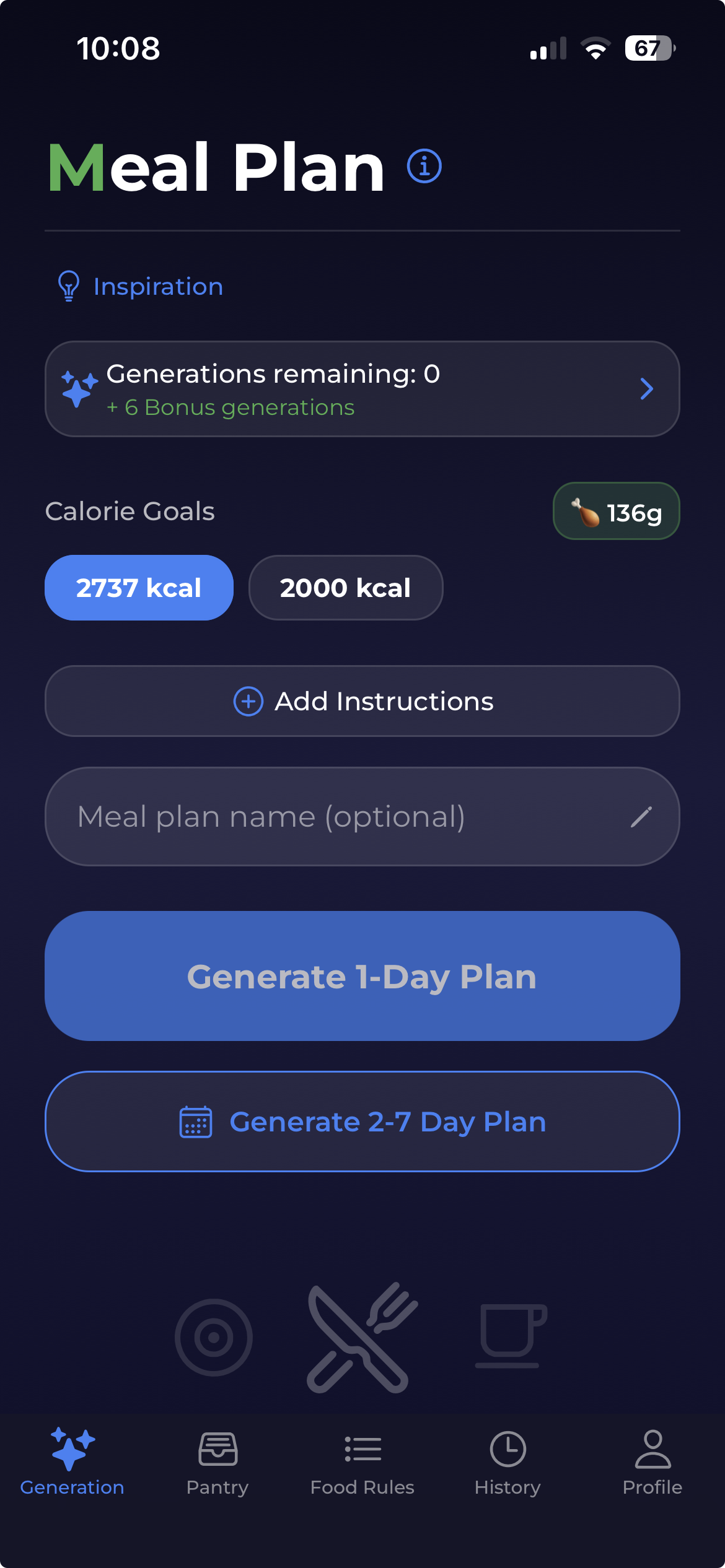
Calculating your TDEE and macros is the first step — but the real challenge is turning those numbers into actual meals, every day, from the foods you have available. That is where Qedamio's AI takes over:
- Built-in TDEE Calculator: Choose Basic mode for quick setup or Advanced mode to factor in daily steps, workout frequency, workout intensity, and your preferred weight loss rate (slow, moderate, fast, or aggressive). The AI calculates your maintenance calories, deficit target, and optimal macro split.
- AI generates deficit meals from your pantry: Add the foods you have at home. The AI creates complete meal plans with exact portions, per-meal macros, and quick recipe instructions — using strictly your pantry items and never inventing ingredients you don't have.
- Protein kept high to preserve muscle: The AI prioritizes protein distribution across all meals, ensuring you hit your daily protein target to minimize muscle loss during your deficit.
- Custom food rules: Define how you want to eat — "high-protein breakfast", "no snacks after 8pm", "keep dinner under 500 kcal", "eggs every morning". The AI follows your rules every time it generates a plan.
- Recalculate as you progress: As your weight drops, update your stats in the calculator and the AI adjusts your targets automatically — keeping your deficit effective throughout your entire fat loss phase.
Common Calorie Deficit Mistakes
Even with the right calorie target, these common mistakes can stall your progress or cause unnecessary muscle loss:
- Cutting too aggressively: Deficits larger than 750 kcal lead to muscle loss, metabolic slowdown, and increased hunger that makes the diet unsustainable. A moderate 300-500 kcal deficit produces better long-term results.
- Not eating enough protein: Protein is the single most important macronutrient during a deficit. Aim for 2.0-2.4g per kg of body weight. Low protein = muscle loss, even if your deficit is moderate.
- Not recalculating as weight drops: Your TDEE decreases as you lose weight. A deficit that worked at 90 kg may be at maintenance by the time you reach 80 kg. Recalculate every 2-4 weeks.
- Weekend overeating erasing the weekly deficit: A 500 kcal daily deficit creates a 3,500 kcal weekly deficit. One Saturday of uncontrolled eating can erase most of that. Consistency across all 7 days matters more than perfection on weekdays.
- Relying on cardio alone: Cardio burns calories, but resistance training preserves muscle. Without resistance training, a significant portion of weight lost during a deficit comes from muscle — not fat. Combine both for optimal body composition.
Frequently Asked Questions
What is TDEE?
TDEE stands for Total Daily Energy Expenditure — the total number of calories you burn per day including your Basal Metabolic Rate (BMR) plus all physical activity. It is calculated by finding your BMR using the Mifflin-St Jeor equation and multiplying by an activity factor (1.2 for sedentary to 1.9 for extremely active).
How much of a calorie deficit do I need to lose weight?
A moderate deficit of 300-500 kcal below your TDEE is the most sustainable approach, leading to approximately 0.3-0.5 kg of fat loss per week. Larger deficits produce faster results but increase the risk of muscle loss and metabolic adaptation.
Can I lose fat without losing muscle?
Yes. Keep protein high (2.0-2.4g per kg of body weight), train with resistance exercises, and keep your calorie deficit moderate (300-500 kcal). Aggressive deficits and low protein are the two biggest causes of muscle loss during a diet.
Is a 1500 calorie diet safe?
It depends on your body size and TDEE. For smaller individuals with a lower TDEE, 1500 kcal may be a moderate deficit and perfectly safe. For larger or more active people, 1500 kcal could be dangerously low. You should generally not eat below your BMR. Use a TDEE calculator to find your personal safe minimum.
How often should I recalculate my deficit?
Every 2-4 weeks as your weight changes. As you lose weight, your BMR and TDEE decrease, which means your original deficit shrinks over time. Recalculating ensures you stay in an effective deficit throughout your fat loss journey.
References
- Mifflin MD, St Jeor ST, et al. "A new predictive equation for resting energy expenditure in healthy individuals." Am J Clin Nutr. 1990. (Mifflin-St Jeor equation)
- Hall KD, et al. "Quantification of the effect of energy imbalance on bodyweight." Lancet. 2011.
- USDA Dietary Guidelines for Americans, 2020-2025. dietaryguidelines.gov
← Back to AI Meal Planner · Related: Weight Loss Planner · Cutting Diet Planner · Intermittent Fasting Plan · How to Calculate Macros · High Protein Foods Guide · Macro Meal Planner
Disclaimer: This article is for informational purposes only and does not constitute medical or nutritional advice. Consult a qualified healthcare professional or registered dietitian before making significant changes to your diet, especially if you have pre-existing health conditions.