How to Calculate Your Macros
Step-by-step guide to finding your ideal protein, carb, and fat targets for any fitness goal.
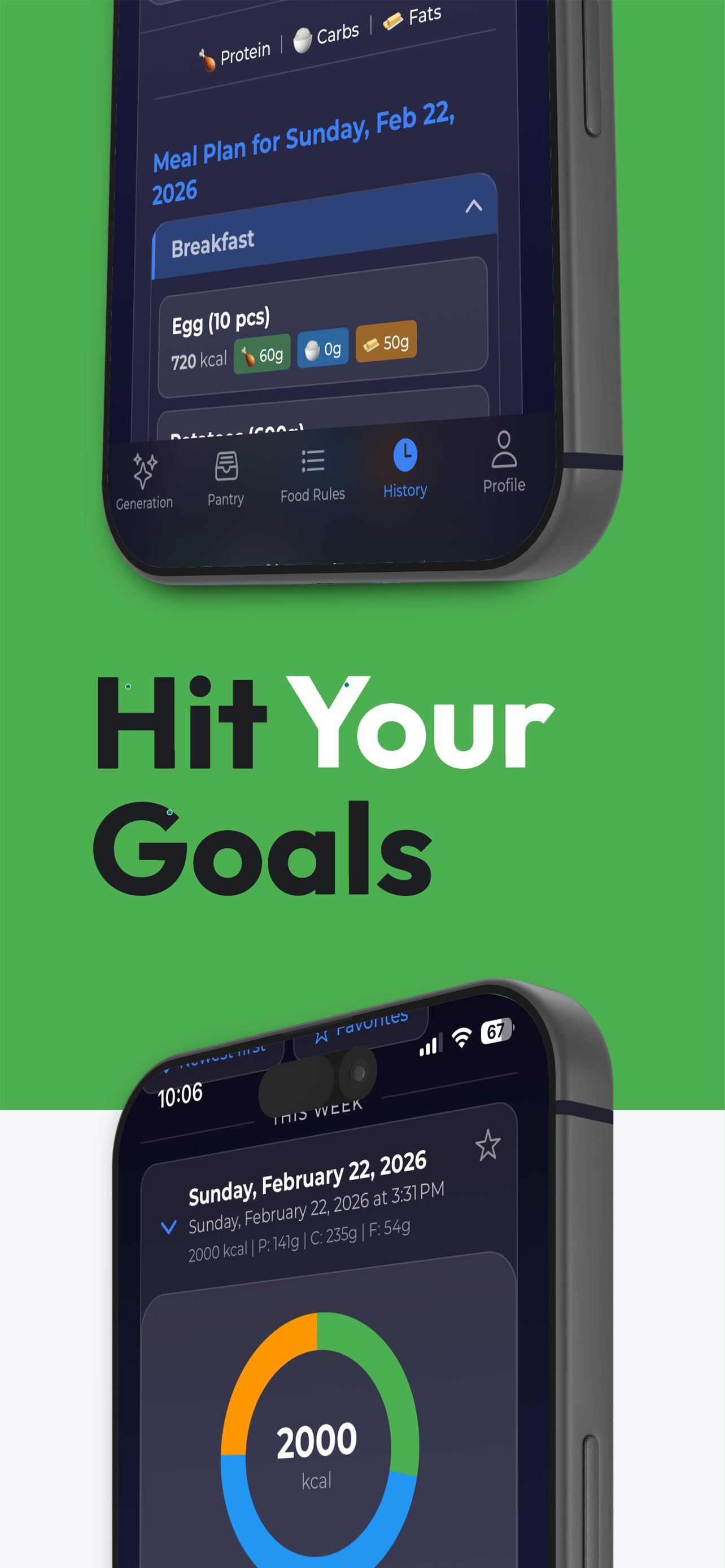
TL;DR: Calculate your TDEE (BMR x activity factor), set calories based on your goal (deficit for fat loss, surplus for muscle), then allocate protein first (1.6-2.2g/kg), fats second (0.8-1.2g/kg), and fill the rest with carbs. Or use Qedamio's built-in AI calculator.
Macros (macronutrients) are the foundation of any nutrition plan. Whether your goal is weight loss, muscle building, or just eating healthier — understanding how to set your protein, carb, and fat targets makes the difference between random eating and purposeful nutrition. Here's how to calculate your macros step by step.
Step 1: Calculate Your TDEE (Total Daily Energy Expenditure)
Your TDEE is how many calories you burn per day including all activity. Start with your BMR (Basal Metabolic Rate) — the calories your body burns at rest.
Mifflin-St Jeor Equation (Most Accurate)
Men: BMR = 10 x weight(kg) + 6.25 x height(cm) - 5 x age - 5
Women: BMR = 10 x weight(kg) + 6.25 x height(cm) - 5 x age - 161
Activity Multiplier
Multiply your BMR by your activity level:
- Sedentary (desk job, no exercise): BMR x 1.2
- Lightly active (1-3 days/week exercise): BMR x 1.375
- Moderately active (3-5 days/week exercise): BMR x 1.55
- Very active (6-7 days/week exercise): BMR x 1.725
- Extremely active (physical job + exercise): BMR x 1.9
Example: 30-year-old male, 80 kg, 180 cm, exercises 4x/week.
BMR = 10(80) + 6.25(180) - 5(30) - 5 = 1,775 kcal
TDEE = 1,775 x 1.55 = 2,751 kcal/day
Step 2: Set Your Calorie Target Based on Goal
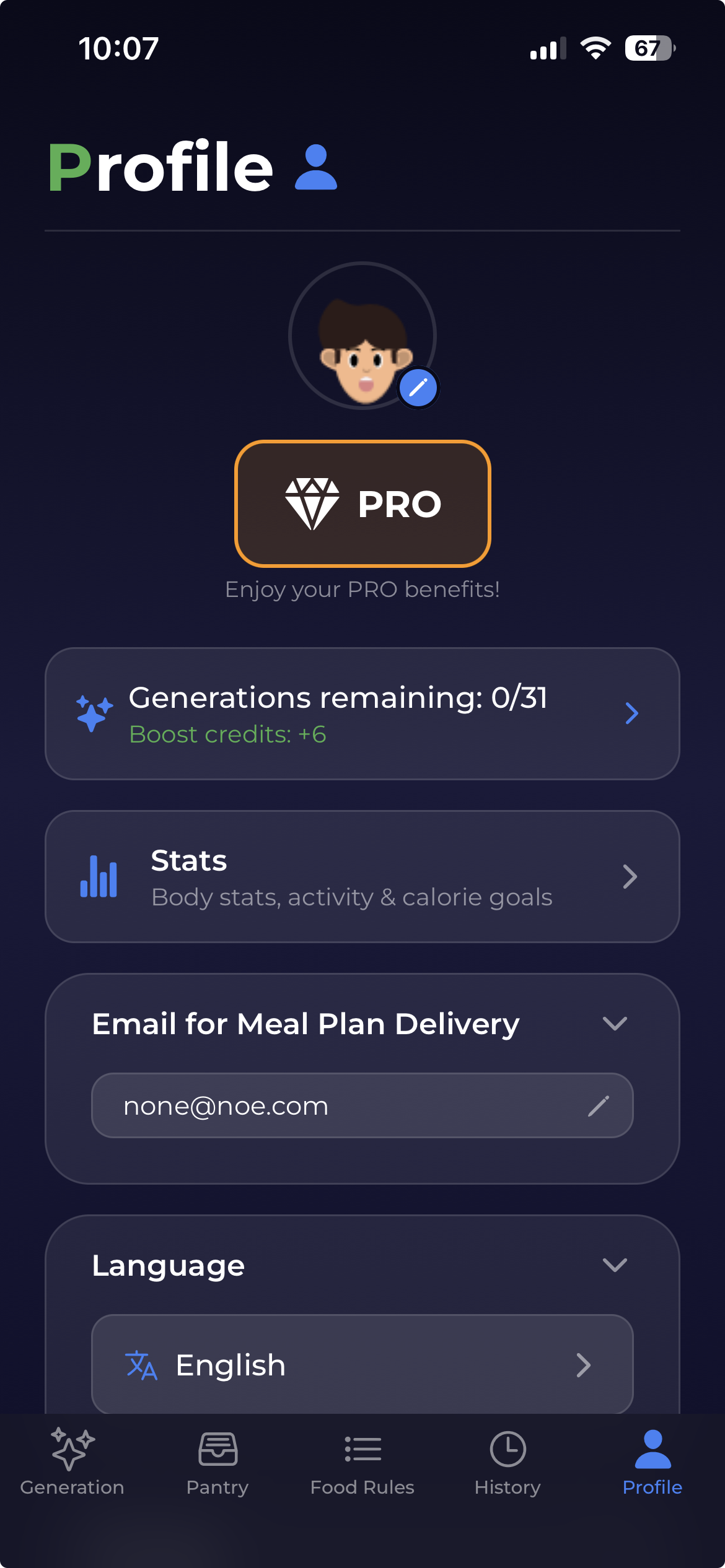
- Lose weight: TDEE minus 300-500 kcal (moderate deficit) or minus 500-750 kcal (aggressive) — see our calorie deficit guide for details
- Maintain weight: Eat at TDEE
- Build muscle: TDEE plus 200-500 kcal (lean bulk)
Step 3: Set Protein
Protein is the most important macro to set first. Choosing the right high-protein foods makes hitting these targets much easier. Evidence-based recommendations:
- General fitness: 1.6-2.2g per kg body weight
- Weight loss (preserve muscle): 2.0-2.4g per kg
- Muscle building: 1.6-2.2g per kg
- Maintenance: 1.2-1.6g per kg
Example: 80 kg person on a muscle-building plan: 80 x 2.0 = 160g protein/day (640 kcal from protein)
Step 4: Set Fats
Dietary fat is essential for hormone production (especially testosterone), vitamin absorption, and brain function. Don't go too low.
- General recommendation: 0.8-1.2g per kg body weight
- Cutting (minimum): 0.6-0.8g per kg
- Bulking: 0.8-1.2g per kg
Example: 80 kg person: 80 x 1.0 = 80g fat/day (720 kcal from fat)
Step 5: Fill the Rest with Carbs
After protein and fats are set, remaining calories go to carbohydrates. Carbs fuel your workouts and daily activity.
Example (building muscle at 3,000 kcal):
Protein: 160g = 640 kcal
Fat: 80g = 720 kcal
Remaining: 3,000 - 640 - 720 = 1,640 kcal
Carbs: 1,640 / 4 = 410g carbs/day
Step 6: Let AI Handle the Daily Planning
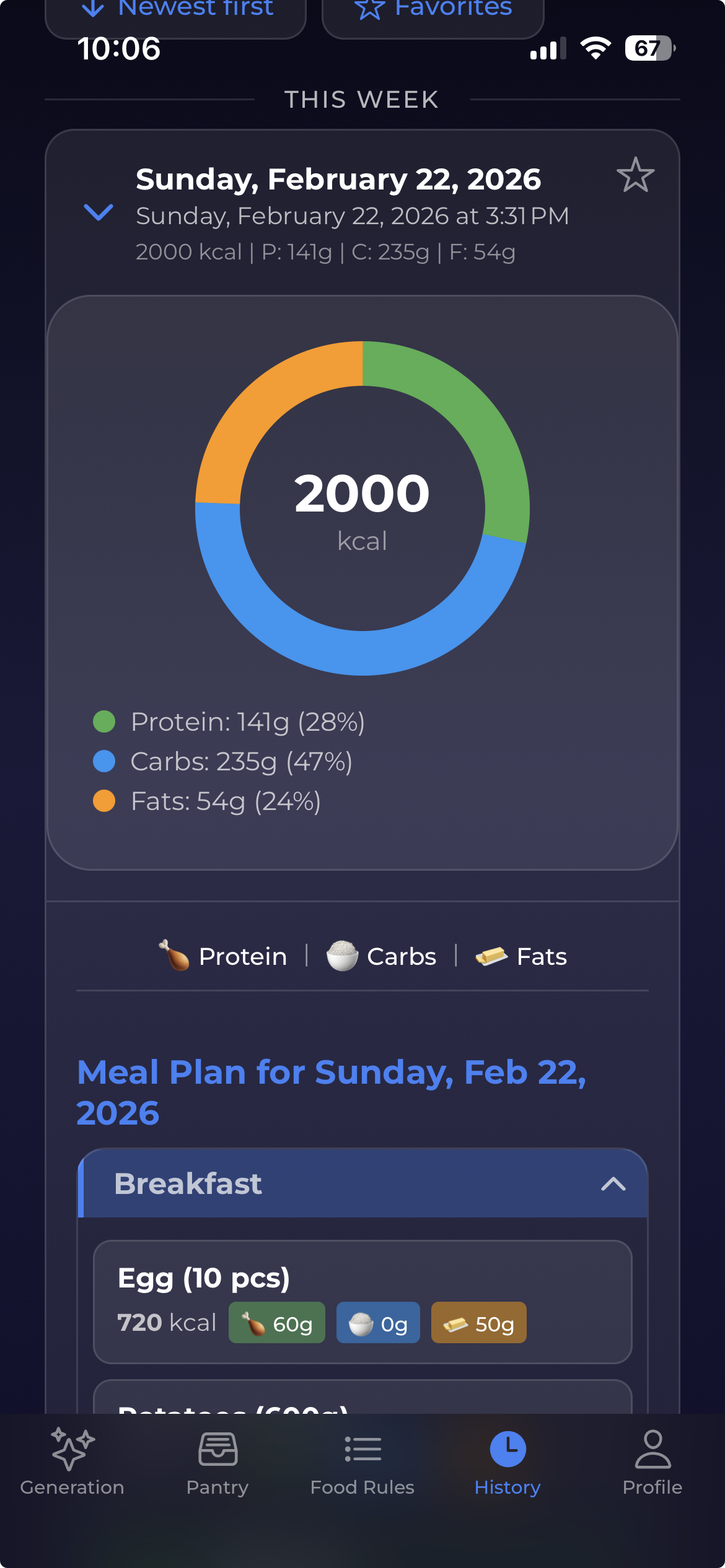
Don't want to do the math yourself? Qedamio has a built-in AI calorie calculator that does all of this for you:
Basic Mode — quick setup in under a minute:
- Gender, age, height, weight
- Activity level (sedentary, light, active, very active)
- Goal (lose weight, maintain, gain muscle)
Advanced Mode — full control for serious athletes:
- Everything in Basic, plus:
- Activity tracking by daily steps OR lifestyle description
- Workouts per week (0-14) and workout intensity (low, moderate, high)
- Weight loss rate: slow, moderate, fast, or aggressive
- Bulk type: lean, moderate, or aggressive
- Custom protein targeting (g per kg/lb, or exact grams)
- Minimum fats setting for hormone health
- Voice notes for additional context
- Metric or imperial units with automatic conversion
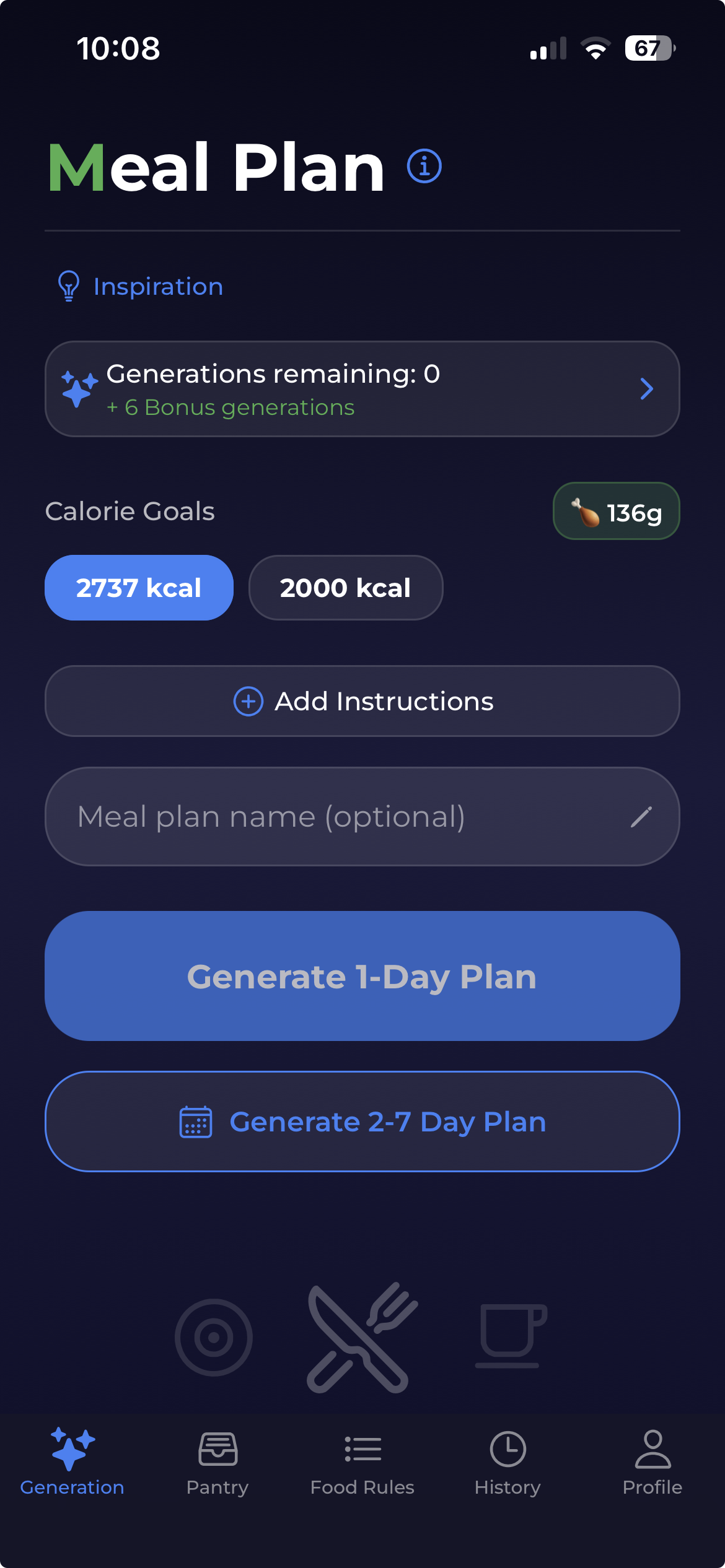
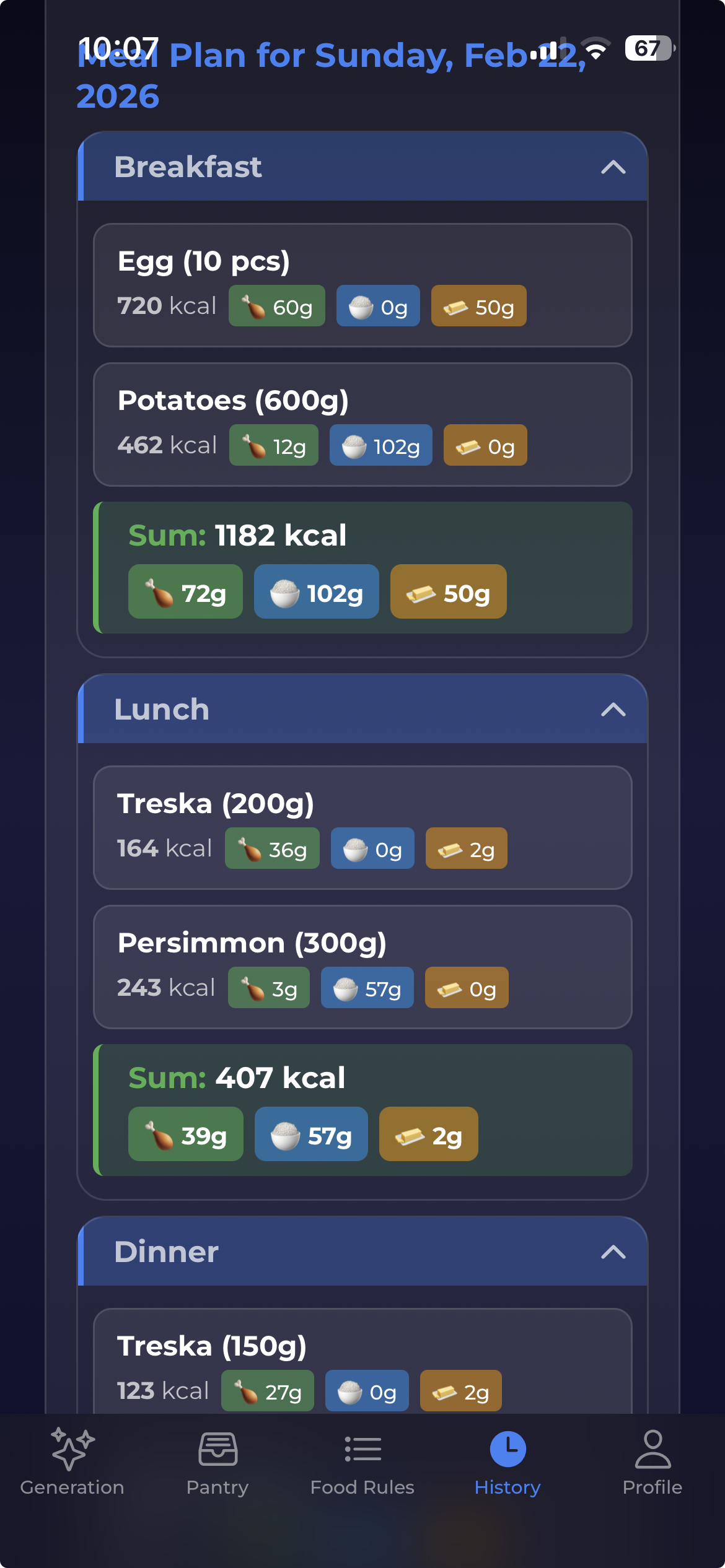
The AI analyzes your data and gives you precise daily calories, maintenance calories, protein target, and a detailed explanation of the calculation. Then just:
- Add your pantry items — the AI uses strictly these foods and never invents ingredients
- Set food rules to shape your meals (e.g., "eggs for breakfast", "4 meals, no snacks")
- Tap Generate — the AI creates a complete meal plan with exact amounts, per-meal macros, and quick recipe instructions
You set up your goals once. The AI handles the daily planning — always using only your pantry items and following your food rules.
Frequently Asked Questions
What are macros?
Macros (macronutrients) are the three main nutrients your body needs in large amounts: protein (4 kcal/g), carbohydrates (4 kcal/g), and fats (9 kcal/g). Your macro ratio affects body composition, energy, and performance.
How do I calculate my TDEE?
Find your BMR using the Mifflin-St Jeor equation, then multiply by your activity factor (1.2 for sedentary to 1.9 for very active). Qedamio has a built-in calculator that does this for you.
How much protein do I need per day?
For general fitness: 1.6-2.2g per kg of body weight. For weight loss: 2.0-2.4g per kg. For muscle building: 1.6-2.2g per kg. For maintenance: 1.2-1.6g per kg.
How do I calculate macros for weight loss?
Calculate your TDEE, subtract 300-500 kcal for your deficit target. Set protein high (2.0-2.4g per kg) to preserve muscle. Set fats at 0.8-1.0g per kg. Fill remaining calories with carbs. Example: 70 kg person at 2,000 kcal deficit: 154g protein, 63g fat, 175g carbs.
References
- Mifflin MD, St Jeor ST, et al. "A new predictive equation for resting energy expenditure." Am J Clin Nutr. 1990.
- International Society of Sports Nutrition position stand: diets and body composition. Aragon AA, et al. J Int Soc Sports Nutr. 2017. jissn.biomedcentral.com
- USDA Dietary Guidelines for Americans, 2020-2025. dietaryguidelines.gov
← Back to AI Meal Planner · Related: Macro Meal Planner · Calorie Deficit Plan · Weight Loss Planner · High Protein Foods Guide · Muscle Building Planner
Disclaimer: This article is for informational purposes only and does not constitute medical or nutritional advice. Consult a qualified healthcare professional or registered dietitian before making significant changes to your diet, especially if you have pre-existing health conditions.