How to Reduce Food Waste with Meal Planning
Plan meals from what you already have. Stop throwing away food, save money, and eat better — all by using your pantry smarter.
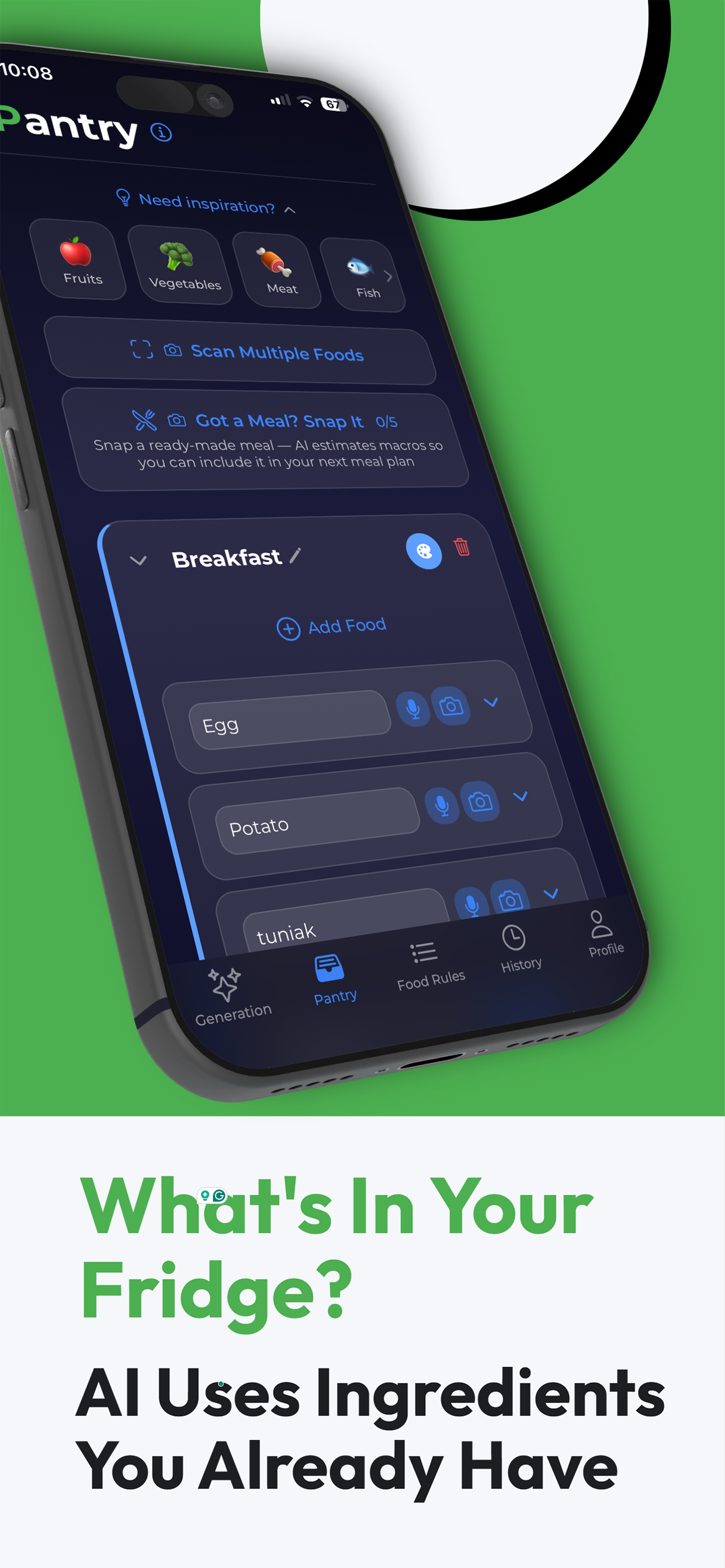
TL;DR: The average household wastes 30–40% of the food it buys. The main reason? Buying without a plan. The fix is simple: plan your meals around the food you already own. Add your pantry items, let AI generate meals with exact portions, and use everything before it expires. Less waste, more savings, better meals.
The Food Waste Problem — By the Numbers
Food waste is any food intended for human consumption that is discarded, lost, or left to spoil — whether raw ingredients, prepared meals, or leftovers. It's one of the largest solvable problems in the modern kitchen. And it starts at home — not at farms or restaurants.
- 1.3 billion tonnes of food is wasted globally every year (UN FAO).
- 30–40% of the food supply in the US is wasted, mostly at the consumer level (USDA).
- The average US household throws away $1,500 worth of food per year (NRDC).
- Food waste in landfills produces methane — a greenhouse gas 80x more potent than CO2 in the short term.
- If food waste were a country, it would be the third-largest emitter of greenhouse gases, after the US and China.
The uncomfortable truth: most of this waste happens in our kitchens. Not because we're careless — but because we buy food without a plan for how to use it.
Why Food Goes to Waste at Home
Understanding why food ends up in the bin is the first step to fixing it. Research consistently identifies the same patterns:
1. Buying Without a Plan
This is the number one cause. You go to the store, buy what looks good, and hope you'll figure out meals later. You won't. Half the produce sits in the fridge until it's past its best. Sound familiar?
2. Forgetting What You Already Have
That yogurt buried behind the milk. The chicken breast frozen three weeks ago. The half-used bag of rice in the cupboard. When you don't know what's in your kitchen, you can't use it. You buy duplicates. Things expire.
3. Cooking Too Much
Without exact portion guidance, most people cook more than they need. Leftovers sit in the fridge for a day or two, then get tossed. The intention was good — "I'll eat it tomorrow" — but it rarely happens.
4. Impulse Buying and Bulk Deals
"Buy 3 for 2" sounds like a saving — until the third item expires uneaten. Bulk deals on perishable items are one of the biggest waste traps. You're not saving money if a third of it ends up in the bin.
5. Not Knowing What to Cook
You open the fridge, see random ingredients, and can't think of a meal. So you order takeout. The ingredients sit there another day. This "what do I even make with this?" paralysis is a daily source of waste.
The common thread: Every cause of food waste comes back to the same root problem — no plan. You have food but no plan to use it. Meal planning, specifically from your pantry, directly solves this.
How Meal Planning from Your Pantry Fixes This
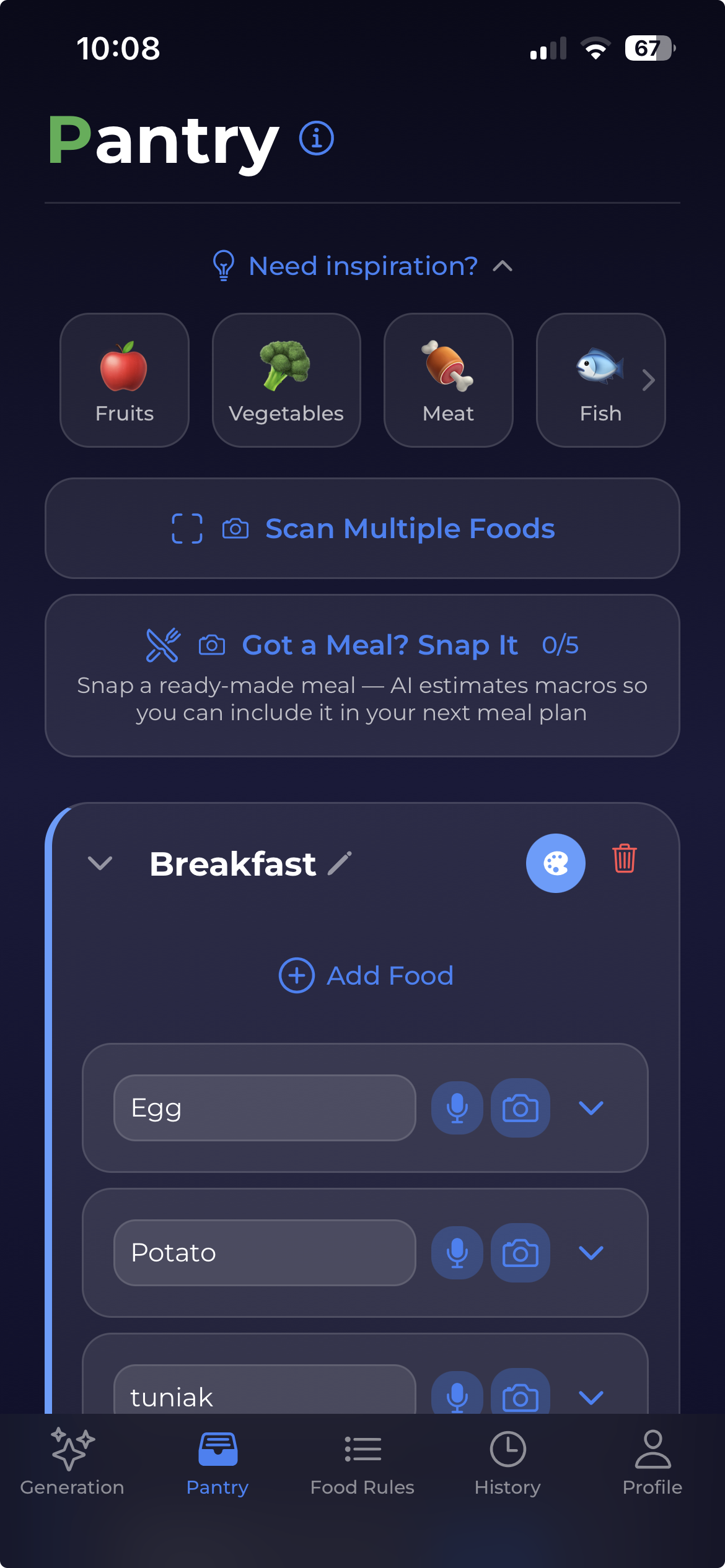
Traditional meal planning starts with recipes and ends with a shopping list. That approach still generates waste — you buy specific ingredients for specific recipes, and unused portions go bad.
Pantry-first meal planning flips this completely. Instead of starting with "what recipe do I want to make?", you start with "what do I already have?" The result: meals built entirely from food that's already in your kitchen.
This is the core principle behind pantry-based meal planning — and it's the most effective way to reduce food waste at home.
Every Ingredient Has a Purpose
When meals are generated from your pantry, every item gets assigned to a meal. Nothing sits unused. That half bag of oats, those two chicken breasts, the spinach that's been in the fridge for three days — all of it gets used in a balanced meal plan.
No Random Grocery Runs
If your meals come from foods you already own, you don't need to buy anything extra. Fewer grocery trips = fewer impulse purchases = less food brought home without a plan. When you do shop, you buy with intention — to restock what you've used.
Exact Portions, Zero Guesswork
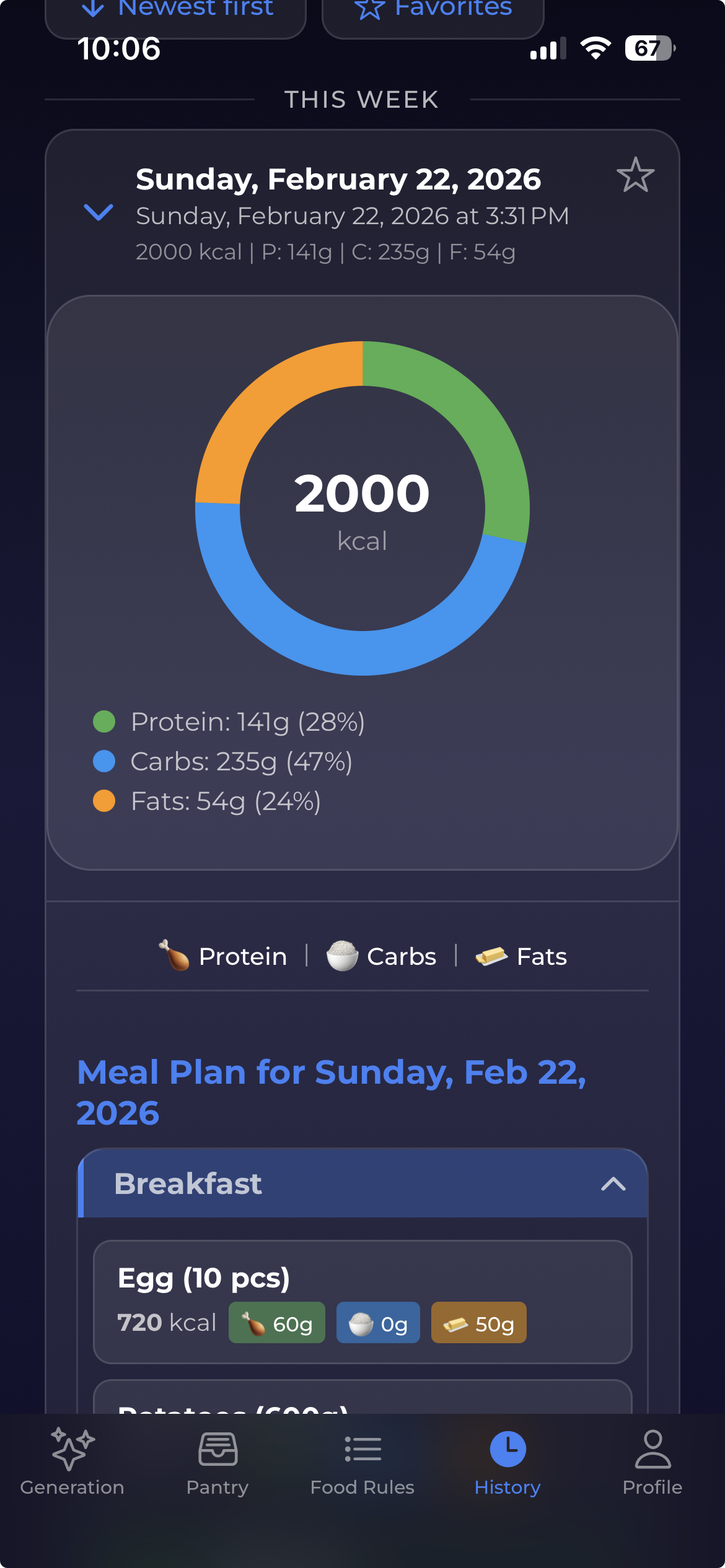
AI-generated meal plans include exact amounts for every ingredient. You cook 150g of rice, not "some rice." You use 2 eggs, not "a few." This precision means you cook exactly what you need — no excess, no leftovers that become waste.
How Qedamio Makes Zero-Waste Eating Practical
The concept of cooking from your pantry isn't new. But doing it consistently — every day, with balanced nutrition — is hard without a tool. Here's how Qedamio's AI meal planner turns the idea into a daily habit:
- Add Your Foods: List what you have at home — fridge, freezer, cupboard. Use voice input, type manually, or organize by sections. This is your digital pantry.
- Set Your Goals: Configure your calorie and macro targets (protein, carbs, fats). The AI will build nutritionally balanced meals, not just random combinations.
- Add Food Rules: Allergies, dislikes, dietary preferences — the AI respects all of them. No meals with ingredients you won't eat.
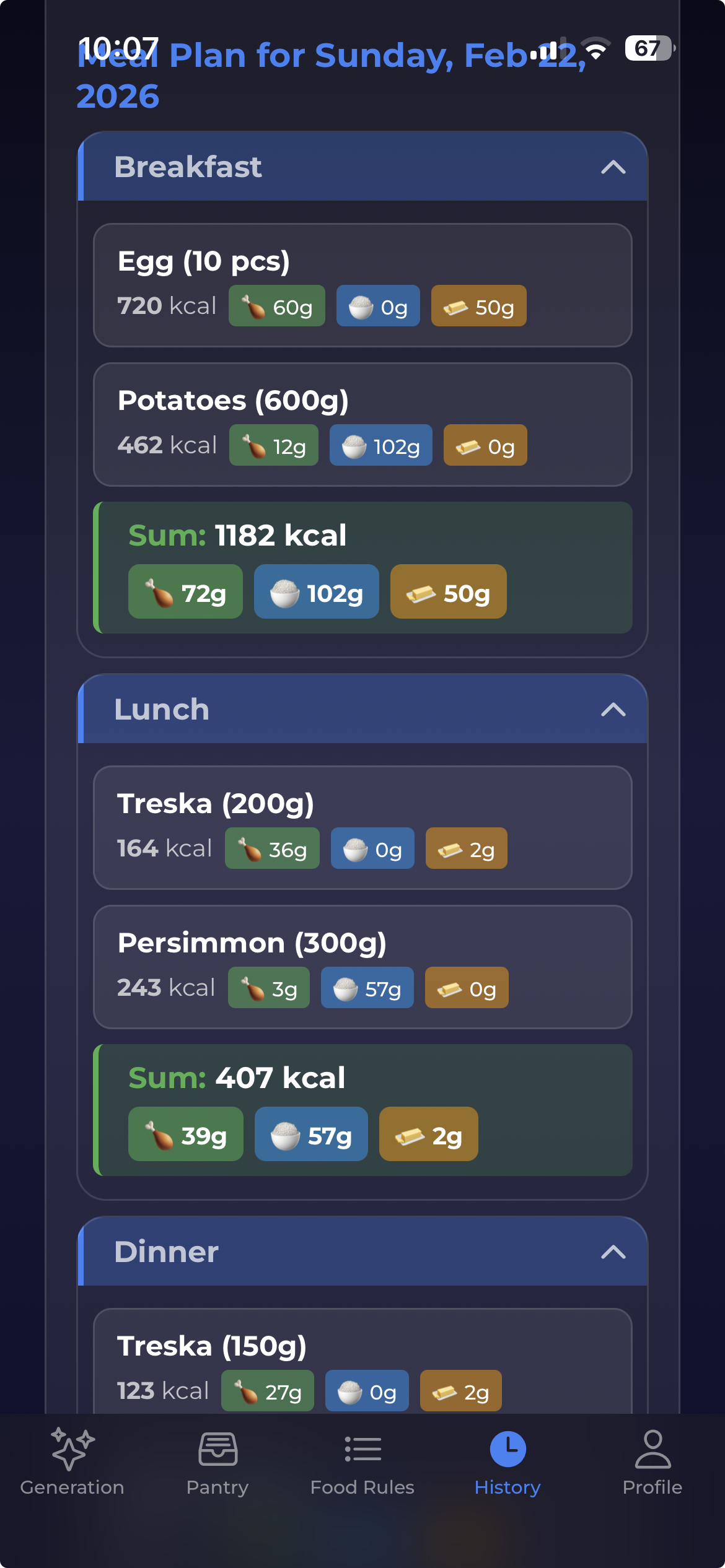
- Generate: Get a complete day of meals with exact portions, per-meal macros, and prep instructions. Every ingredient comes from your pantry. Nothing invented.
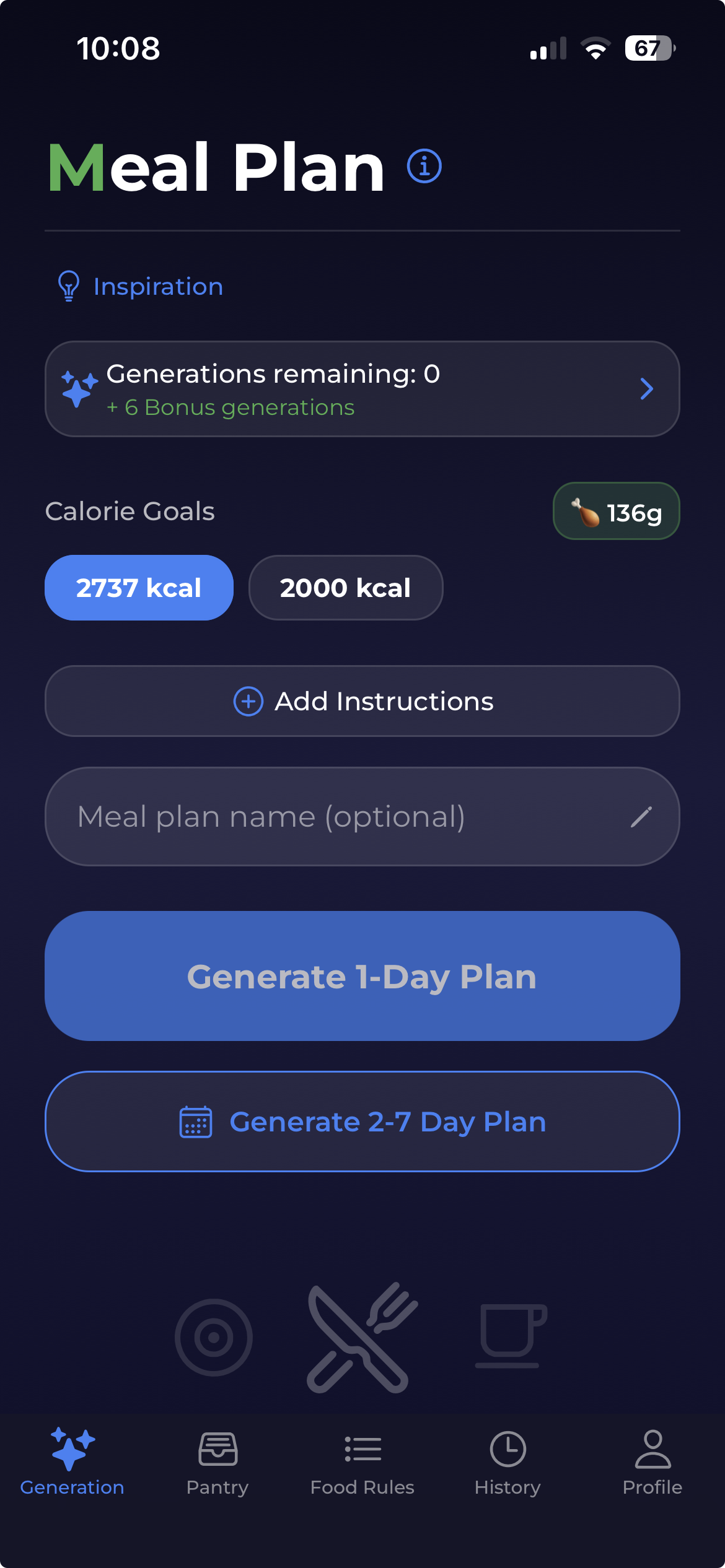
The key difference: The AI uses strictly the foods in your pantry. It never invents ingredients you don't have. Every meal plan is immediately actionable — open the app, follow the plan, use your food.
5 Practical Strategies to Reduce Food Waste
Beyond using a meal planner, these daily habits compound the effect:
1. Audit Your Kitchen Weekly
Spend 5 minutes checking what you have before you plan meals or go shopping. Update your pantry in the app — remove what you've used, add what's new. This simple habit prevents "I forgot I had that" waste. A weekly planning routine makes this automatic.
2. Prioritize Perishables
Fresh vegetables, dairy, and meat expire fastest. When generating a meal plan, the AI creates meals from whatever you've listed — so adding your perishables first ensures they get used first. Think of it as first-in, first-out for your fridge.
3. Batch Cook with a Plan
Meal prepping isn't just for gym bros. Cooking 3–5 days of meals in one session means every ingredient gets used with purpose. Use multi-day meal planning to generate several days at once — the AI coordinates ingredients across meals, so nothing is wasted.
4. Store Food Properly
Proper storage extends the life of everything in your kitchen:
- Herbs: Wrap in a damp paper towel, store in a sealed container. Lasts 1–2 weeks instead of 3 days.
- Bread: Freeze what you won't eat within 2 days. Toast directly from frozen.
- Berries: Don't wash until you eat them. Moisture accelerates mold.
- Leafy greens: Store with a paper towel in a sealed bag to absorb excess moisture.
- Cheese: Wrap in parchment paper, then loosely in a plastic bag. Never cling film directly.
5. Embrace "Ugly" Ingredients
That slightly soft apple, the wilted spinach, the brown banana — they're all perfectly fine for cooking. An AI meal planner doesn't care what your food looks like. It builds meals from what you have, regardless of appearance. Smoothies, soups, stir-fries, and baked goods are perfect for using up produce that's past its visual peak.
Food Waste vs. Meal Planning: The Impact
| Without Meal Planning | With Pantry Meal Planning |
|---|---|
| Buy groceries, hope to use them | Plan meals from food you already own |
| Forget what's in the fridge | Digital pantry tracks everything |
| Cook random amounts, create leftovers | Exact portions for every ingredient |
| Produce expires unused | Every item assigned to a meal |
| "What do I make?" paralysis → takeout | One-tap meal plan, ready to cook |
| ~$1,500/year wasted on thrown-away food | $50–150/month saved on groceries |
| Contributing to landfill methane | Measurably less environmental impact |
The Money You Save by Wasting Less
Food waste isn't just an environmental issue — it's a financial one. When you throw away food, you throw away money. Here's what reducing waste actually saves:
- Fewer grocery trips: When you eat from your pantry, you shop less often. Fewer trips = fewer impulse buys. Most people spend 20–40% of their grocery budget on unplanned items.
- No duplicate purchases: A digital pantry shows what you have. No more buying a second jar of peanut butter because you forgot about the one in the cupboard.
- Less takeout: The "I have food but don't know what to make" problem disappears when you have a ready meal plan. Fewer $15–25 takeout orders adds up fast.
- Bulk buying actually works: Buying in bulk saves money — but only if you use everything. A meal planner that builds meals from your inventory makes bulk purchases pay off instead of expire.
Conservative estimate: a household that cuts food waste by half saves $600–900 per year. That's before factoring in fewer grocery trips and less takeout.
Sustainability Beyond Your Kitchen
Reducing food waste at home has a ripple effect far beyond your bin:
- Less landfill methane: Food decomposing in landfills is a major source of methane emissions. Every meal you eat instead of toss keeps organic waste out of the system.
- Less water waste: Producing the food that gets wasted globally uses 250 km³ of water per year — more than the annual flow of the Volga, Europe's largest river.
- Less land use: 1.4 billion hectares of farmland produce food that's never eaten. Reducing demand through less waste means less pressure on agricultural land and ecosystems.
- Lower carbon footprint: Food production, transportation, refrigeration, and disposal all generate emissions. Using what you buy eliminates a meaningful portion of your household's carbon footprint.
You don't need to go fully zero-waste to make a difference. Even a 25% reduction in household food waste — achievable with consistent meal planning — has a measurable environmental impact.
Start Cooking from Your Pantry
Add your foods, generate a meal plan, and use what you already have. 7 free plans included. No credit card required.
Who Benefits Most from Pantry Meal Planning?
Busy Professionals
You have food at home but no time to figure out what to cook. By the time you get around to it, half of it has gone bad. A one-tap meal plan from your pantry solves this in under a minute — open the app, generate, cook.
Families
Feeding a family means more food, more variety, and more waste potential. Pantry-based planning uses everything you buy for the household. Set food rules to account for allergies and preferences, and every family member eats well without food going unused.
Students and Budget-Conscious Eaters
When every dollar counts, throwing away food is throwing away money. Generate nutritionally balanced meals from budget-friendly pantry staples — rice, oats, eggs, frozen vegetables, canned beans. Nothing goes to waste, and you eat well on a tight budget. For the full budget playbook — cheapest proteins ranked, sample $50/week meal plan, and a Qedamio vs HelloFresh cost comparison — see our cheap meal planner guide.
Fitness-Focused Individuals
You already track macros and plan meals for weight loss, muscle building, or cutting. Whether you're in a calorie deficit or doing intermittent fasting, adding the pantry dimension means your nutrition plan doubles as a waste-reduction plan. Hit your protein targets and use every ingredient — zero conflict between fitness goals and sustainability.
Anyone Trying to Be More Sustainable
You don't need to be a zero-waste influencer. Just use what you buy. That alone puts you ahead of most households. A pantry meal planner makes it effortless.
Common Myths About Food Waste
"Best before" means "throw away after"
Wrong. "Best before" dates indicate peak quality, not safety. Most foods are perfectly safe and nutritious days or weeks past the date. Use your senses — if it looks, smells, and tastes fine, it is fine. Only "use by" dates on high-risk items (raw meat, fish, dairy) are strict safety deadlines.
"I need fresh ingredients for healthy meals"
Not true. Frozen vegetables are nutritionally equivalent to (and sometimes better than) fresh ones — they're flash-frozen at peak ripeness. Canned beans, frozen fish, dried grains, and nut butters are all highly nutritious and last months. A good meal plan uses both fresh and long-lasting items strategically.
"Meal planning is too much effort"
Not with AI. Traditional meal planning involves choosing recipes, calculating portions, and making shopping lists. Pantry-based AI planning takes under a minute: your foods are already listed, the AI does the math, and you get a complete meal plan with one tap.
"Leftovers always go to waste"
Not when portions are exact. AI meal plans specify precise amounts for every ingredient. You cook what you need, eat what you cook. When the plan says 200g of chicken and 150g of rice, that's exactly what ends up on your plate — not in the bin.
Key Takeaways:
• 30–40% of food bought by households is wasted — mostly due to buying without a plan.
• Pantry-first meal planning solves the root cause: every ingredient gets assigned to a meal before it expires.
• AI meal plans include exact portions — you cook precisely what you need, nothing more.
• Reducing food waste saves $600–900+ per year in groceries alone, before counting fewer takeout orders.
• Even a 25% reduction in household food waste makes a measurable environmental difference.
• You don't need to go zero-waste — just use what you buy. A pantry meal planner makes this effortless.
Frequently Asked Questions
How does meal planning reduce food waste?
Meal planning reduces food waste by giving every ingredient a purpose. Instead of buying random groceries and hoping to use them, you plan meals around what you already have. This means fewer forgotten items, less impulse buying, and more intentional eating. Studies show planned households waste up to 25% less food.
What is the biggest cause of household food waste?
Buying food without a plan for how to use it. Impulse purchases, overbuying, and forgetting what's in the fridge or pantry lead to spoilage. A pantry-based meal planner directly addresses this by building meals from ingredients you already own.
How can AI help reduce food waste?
AI meal planners generate meals strictly from the foods in your pantry — never inventing ingredients. This ensures every item gets used. The AI creates balanced meals with exact portions, so you cook what you need without excess. It's a practical, daily tool for reducing waste.
How much money can I save by reducing food waste?
The average household can save $50–150 per month by using the food they already buy instead of letting it expire. Over a year, this adds up to $600–1,800 in savings — before counting fewer grocery trips and less takeout.
What foods are wasted the most at home?
Fresh fruits and vegetables (especially salad, berries, and herbs), bread, dairy products, and leftover cooked meals. These items have short shelf lives and are often bought without a plan. A pantry meal planner prioritizes using perishable items in your meals first.
Do I need to track my pantry every day?
No. A quick weekly update is enough for most people — remove what you've used, add new purchases. The more accurate your pantry, the better the AI can plan meals. But even an approximate inventory is far better than no plan at all.
References
- United Nations Environment Programme. "Food Waste Index Report 2024." UNEP, 2024.
- Buzby JC, Wells HF, Hyman J. "The Estimated Amount, Value, and Calories of Postharvest Food Losses at the Retail and Consumer Levels in the United States." USDA Economic Research Service, EIB-121, 2014.
- Gunders D, Bloom J. "Wasted: How America Is Losing Up to 40 Percent of Its Food from Farm to Fork to Landfill." Natural Resources Defense Council (NRDC), 2017.
- FAO. "Food wastage footprint: Impacts on natural resources." Food and Agriculture Organization of the United Nations, 2013.
- Stancu V, Haugaard P, Lähteenmäki L. "Determinants of consumer food waste behaviour: Two routes to food waste." Appetite, 2016;96:7-17.
- Hebrok M, Boks C. "Household food waste: Drivers and potential intervention points for design — An extensive review." Journal of Cleaner Production, 2017;151:380-392.
← Back to AI Meal Planner · Related: Pantry Meal Planner · Meal Prep Planner · Weekly Planning Guide · Planner for Busy People · Weight Loss Planner · Macro Meal Planner · Meal Plan Generator · Vegan Meal Planner
Disclaimer: This article is for informational purposes only. Food waste statistics cited are approximations based on published research and may vary by region, household size, and individual habits. Specific savings depend on your current waste levels and purchasing patterns. Always follow food safety guidelines when determining whether food is safe to consume.