Cheap Meal Planner — Eat Well on a Budget with AI
Your pantry is already paid for. Plan meals from what you have before you buy more, cut $100–200/month from your grocery bill, and still hit your protein and calorie targets. See how it works →
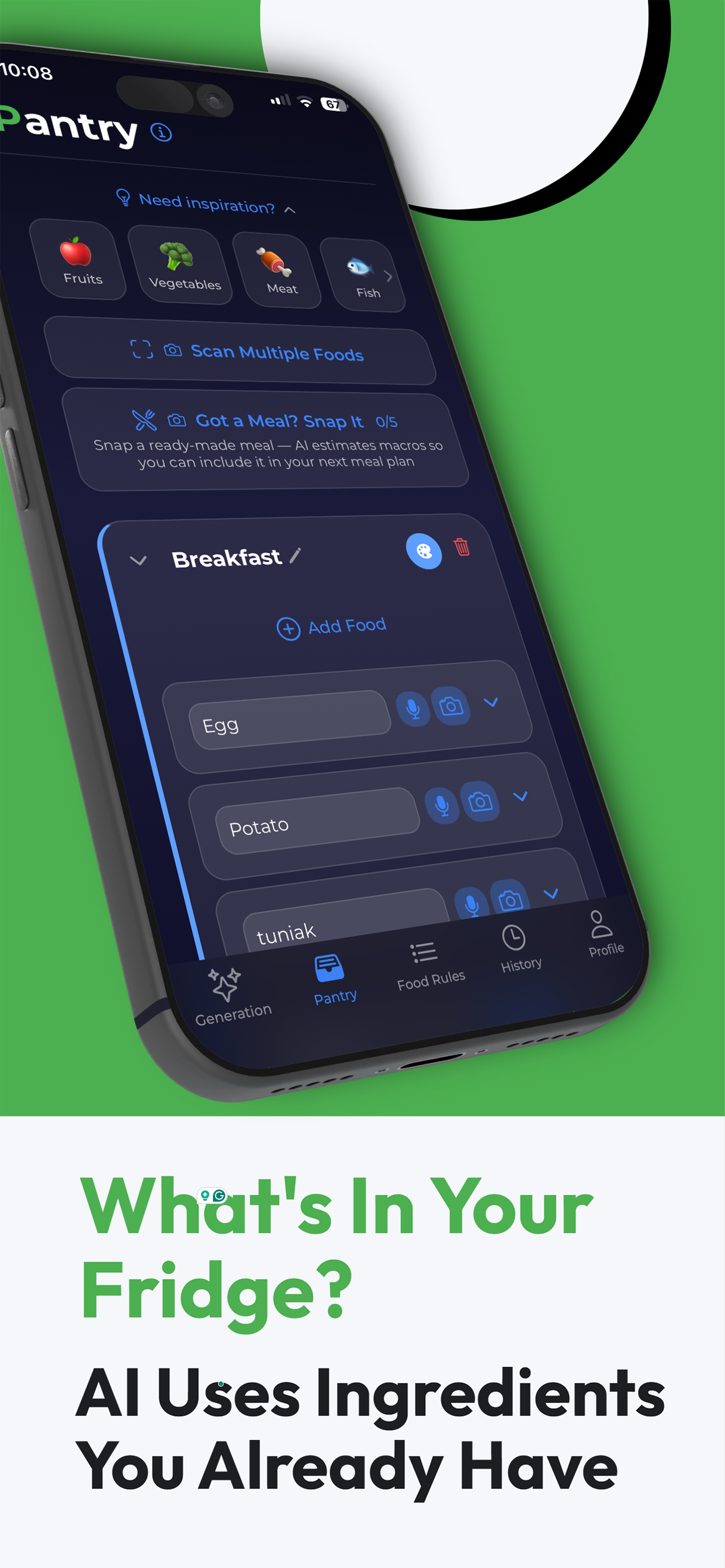
TL;DR: The average household throws away $1,500 of food per year. Budget meal planning is not about eating worse — it is about not wasting the food you already bought. Inventory your pantry, set a few Food Rules (legumes daily, cheap proteins only, no takeout), and let AI build plans that use strictly what you have. Realistic savings: $60–150/month for one adult, $150–300/month for a family of four. Free tier gives you 7 plans to prove it.
Quick Answer: What is a cheap meal planner?
A cheap meal planner is a tool that builds meal plans optimized for grocery cost — either by using what you already have (pantry-first), prioritizing low-cost protein and carb sources, or minimizing food waste. An AI-powered cheap meal planner like Qedamio combines all three: it generates complete meal plans strictly from your current pantry inventory, calculates exact portions so nothing gets thrown away, and redistributes macros across cheap staples like eggs, legumes, oats, and chicken thighs. The result: you hit your calorie and protein goals while spending 30–40% less on groceries.
Budget meal planning by the numbers:
• 30–40% of food purchased by U.S. households is wasted (USDA ERS, 2024)
• $1,500 — average annual value of food thrown away by a family of four
• 570 million tonnes — global household food waste annually (FAO, 2019)
• 11–13% of U.S. household income now goes to groceries, rising yearly
• 3–5× — typical cost multiplier of takeout vs equivalent home cooking
• $0.10 vs $2.80 — cost per 20g protein: dried lentils vs protein bar
• $60–150/month — realistic savings from pantry-first planning (one adult)
• $150–300/month — realistic savings for a family of four
In this guide:
→ Why Your Food Bill Is Higher Than It Should Be
→ The Pantry-First Principle — The Biggest Single Lever
→ Cheapest High-Protein Foods Ranked by Cost per Gram
→ Qedamio vs Other Meal Planning Apps — Cost Comparison
→ How Qedamio Works for Budget Meal Planning
→ Food Rules That Lock In Budget Eating
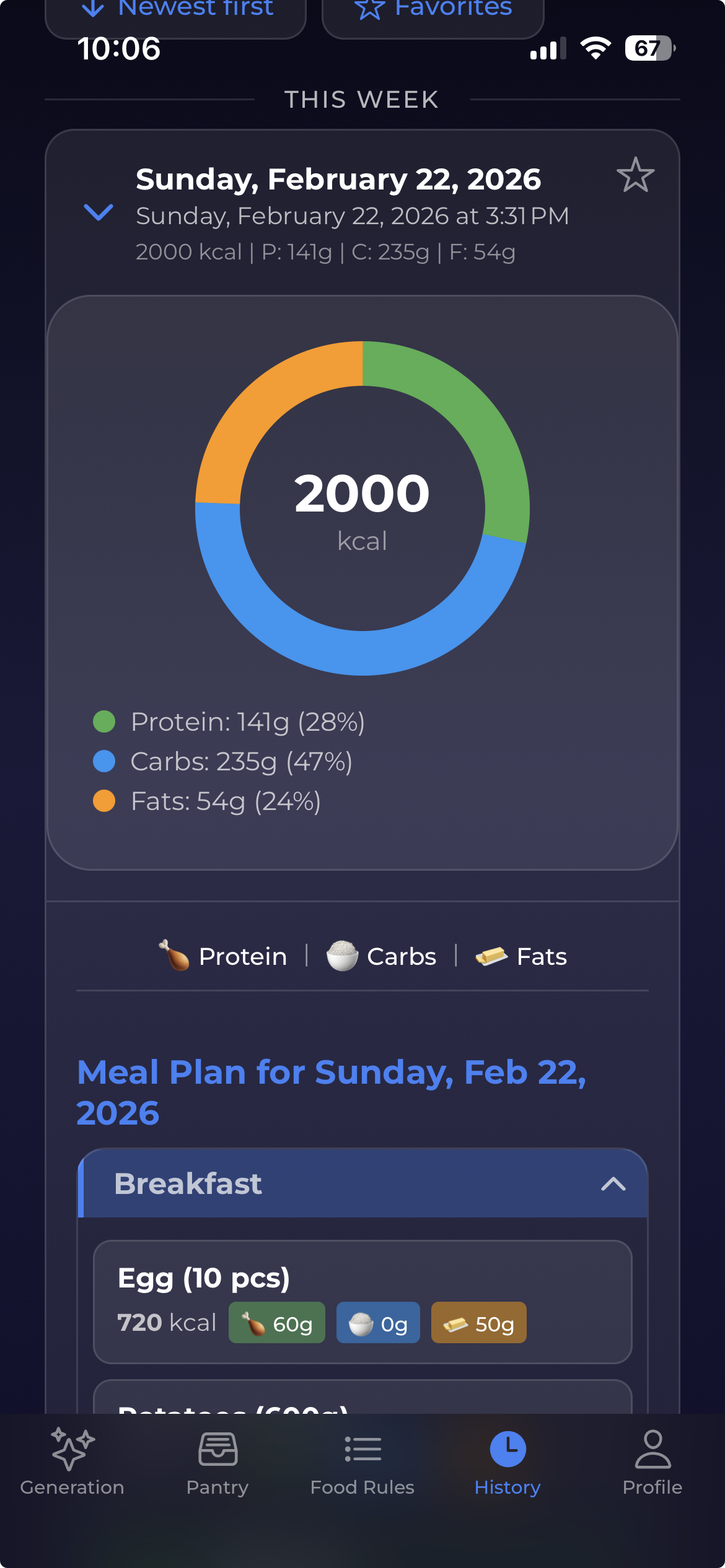
→ Sample $50/Week Meal Plan (2,000 kcal, 140g protein)
→ Budget Meal Planning by Goal
→ Bulk Cooking Strategies That Save Real Money
→ Common Budget Eating Mistakes — And How AI Prevents Them
→ Frequently Asked Questions
Free tier — what you get:
• 7 lifetime AI meal plan generations (no credit card required)
• Unlimited pantry items across unlimited custom sections
• 3 custom Food Rules (e.g. "legumes daily", "no boneless chicken breast", "minimum 25g protein per meal")
• Monthly calorie & macro calculator (BMR / TDEE)
• Full meal plan history with search, favorites, and calendar assignment
Why Your Food Bill Is Higher Than It Should Be
Where the money leaks (2024–2026 data):
• Average U.S. household wastes 30–40% of food purchased (USDA)
• That is roughly $1,500 per year for a family of four
• Global household food waste: ~570 million tonnes annually (FAO)
• Groceries account for 11–13% of average household income — rising
• Takeout and restaurant meals cost 3–5× more per calorie than home cooking
Most people's food spending does not leak because they eat "too much" — it leaks because food gets bought, forgotten, and thrown away. The USDA estimates U.S. households waste 30–40% of the food supply, translating to roughly $1,500 per household per year. The FAO puts global household food waste at about 570 million tonnes annually. This is the biggest single lever you can pull on your grocery budget, and it has nothing to do with buying cheaper food — it has to do with actually eating the food you already bought.
The second leak is buying the wrong form of food. Boneless skinless chicken breast is 2–3× the price per gram of protein compared to a whole chicken. A pre-made protein bar is 4–5× the cost per gram of protein compared to Greek yogurt or cottage cheese. Meal kits (Blue Apron, HelloFresh) are 2–3× the cost per meal of home cooking from the same ingredients. You can eat identical food for a fraction of the cost with minor prep changes.
The third leak is cognitive: planning every meal individually is hard, so you default to takeout, snacks, or simple but expensive items. A good meal planner removes the cognitive cost and lets you eat cheap food without thinking about it.
Typical user scenario (illustrative, based on USDA spending data):
"Before": A single working adult in a mid-size U.S. city spends ~$380/month on groceries and ~$240/month on takeout and lunches. Roughly 35% of the groceries — about $130/month — is thrown away unused. Total monthly food spend: ~$620, with substantial waste.
"After" 2 months of pantry-first planning: groceries drop to ~$240/month (cooking down existing stock before buying), takeout drops to ~$80/month (bulk-cooked meals available), waste drops to under 10%. Total monthly food spend: ~$320.
Net impact: ~$300/month saved without eating worse food — closer to eating better, because cheap staples (eggs, legumes, whole grains) are also nutritionally strong. These numbers reflect a realistic scenario derived from USDA Consumer Expenditure Survey averages, not a specific user testimonial.
The Pantry-First Principle — The Biggest Single Lever
The core idea is simple: do not buy food until you have eaten what you already own.
This one rule eliminates most of the $1,500/year food waste number. If you inventory your pantry, fridge, and freezer every few days and generate meal plans strictly from that inventory, food stops rotting in the crisper. Leftovers get used before they go off. That box of lentils you bought three months ago actually gets cooked. The freezer stops accumulating unidentified frozen items.
This is how a pantry meal planner works. You do not plan meals and then shop — you inventory what you have, plan around it, and only shop for the gaps. This flips the normal order of operations and is genuinely weird the first few times, but it is the single biggest change you can make to cut grocery spending.
The deeper payoff: eating down your pantry also forces variety. Most people cook the same 8–10 meals on repeat. When the AI has to build meals from whatever random inventory you have on a given day, it builds combinations you would never have thought of — and you eat cheaper and more varied food as a side effect.
Cheapest High-Protein Foods Ranked by Cost per Gram
Protein is usually the most expensive macro on a grocery list, so this is where budget eating wins or loses. The table below lists typical U.S. supermarket prices as of early 2026, sorted by approximate cost per gram of protein (cheapest first):
| Food | Typical Price | Protein per Serving | Approx. Cost per 20g Protein |
|---|---|---|---|
| Dried lentils | $1.80 / lb | 18g per 1/4 cup dry | ~$0.10 |
| Dried beans (black, pinto, kidney) | $1.60 / lb | 15g per 1/4 cup dry | ~$0.12 |
| Eggs (large, store brand) | $3.50 / dozen | 6g per egg | ~$0.35 |
| Whole chicken (bone-in) | $1.80 / lb | ~25g per 100g meat | ~$0.32 |
| Chicken thighs (bone-in, skin-on) | $2.20 / lb | ~20g per 100g | ~$0.49 |
| Canned tuna (in water) | $1.20 / 5oz can | 25g per can | ~$0.96 |
| Cottage cheese (store brand) | $2.80 / 16oz tub | 13g per 1/2 cup | ~$1.07 |
| Greek yogurt (store brand) | $4.50 / 32oz tub | 17g per cup | ~$1.12 |
| Rolled oats (paired with milk) | $0.12 / oz | 5g per 1/2 cup + 8g from milk | ~$0.80 (meal total) |
| Canned sardines | $1.80 / can | 22g per can | ~$1.64 |
| Tofu (extra firm) | $2.50 / 14oz block | 8g per 100g | ~$1.46 |
| Whey protein powder | $30 / 2lb tub | 24g per scoop | ~$0.84 |
| Ground beef 80/20 | $5.80 / lb | ~20g per 100g | ~$1.28 |
| Boneless chicken breast | $5.90 / lb | ~30g per 100g | ~$0.87 |
| Salmon fillet | $11.00 / lb | ~25g per 100g | ~$1.94 |
| Protein bar | $2.80 / bar | ~20g per bar | ~$2.80 |
Takeaway: Lentils and beans are ~10× cheaper per gram of protein than a protein bar. Whole chicken is 2–3× cheaper than boneless breast for the same protein. Eggs beat almost everything except legumes. If your current protein comes mainly from bars, shakes, and steak, switching even half of it to eggs, legumes, whole chicken, and canned tuna can cut your protein spend by 50–70%.
Start Saving on Groceries — Free
Your pantry is already paid for. Get 7 free AI meal plans and start using what you have before you buy more. No credit card. No trial clock. Works offline on iPhone and Android.
Qedamio vs Other Meal Planning Apps — Cost Comparison
A cheap meal planner is only cheap if the tool itself does not cost more than what it saves you. Here is how Qedamio compares to popular alternatives on direct cost to the user:
| App | Free Tier | Paid Price | What You Pay For | Planning Model |
|---|---|---|---|---|
| Qedamio | 7 lifetime plans, permanent | $9.99/mo (Medium), $14.99/mo (Pro) | AI meal plans from your pantry | Pantry-first (uses what you have) |
| Eat This Much | Basic auto-planner | $9/mo or $59/year | Grocery lists, multi-day plans | Recipe-based (buys new groceries) |
| Mealime | Limited recipes | $5.99/mo or $49/year | Curated recipes, grocery integration | Recipe-based (buys new groceries) |
| PlateJoy | 10-day trial | $12.99/mo or $69/6mo | Personalized plans, grocery delivery | Recipe-based (buys new groceries) |
| HelloFresh | None | $80–120/week per 2 people | Pre-portioned ingredients delivered | Meal kit (full replacement) |
| MyFitnessPal Premium | Calorie counter only | $19.99/mo or $79.99/year | Macro tracking, not meal planning | Not a meal planner |
Why pantry-first wins for budget users: Every app in the table above except Qedamio assumes you will buy new groceries. A "cheap meal plan" that tells you to buy $120 of specific ingredients is not actually cheap — it is just a different spending pattern. Qedamio's pantry-first model inverts this: the AI uses food you have already bought, so the biggest line item on a budget meal plan is $0. You only shop to fill gaps, not to build meal plans from scratch.
How Qedamio Works for Budget Meal Planning
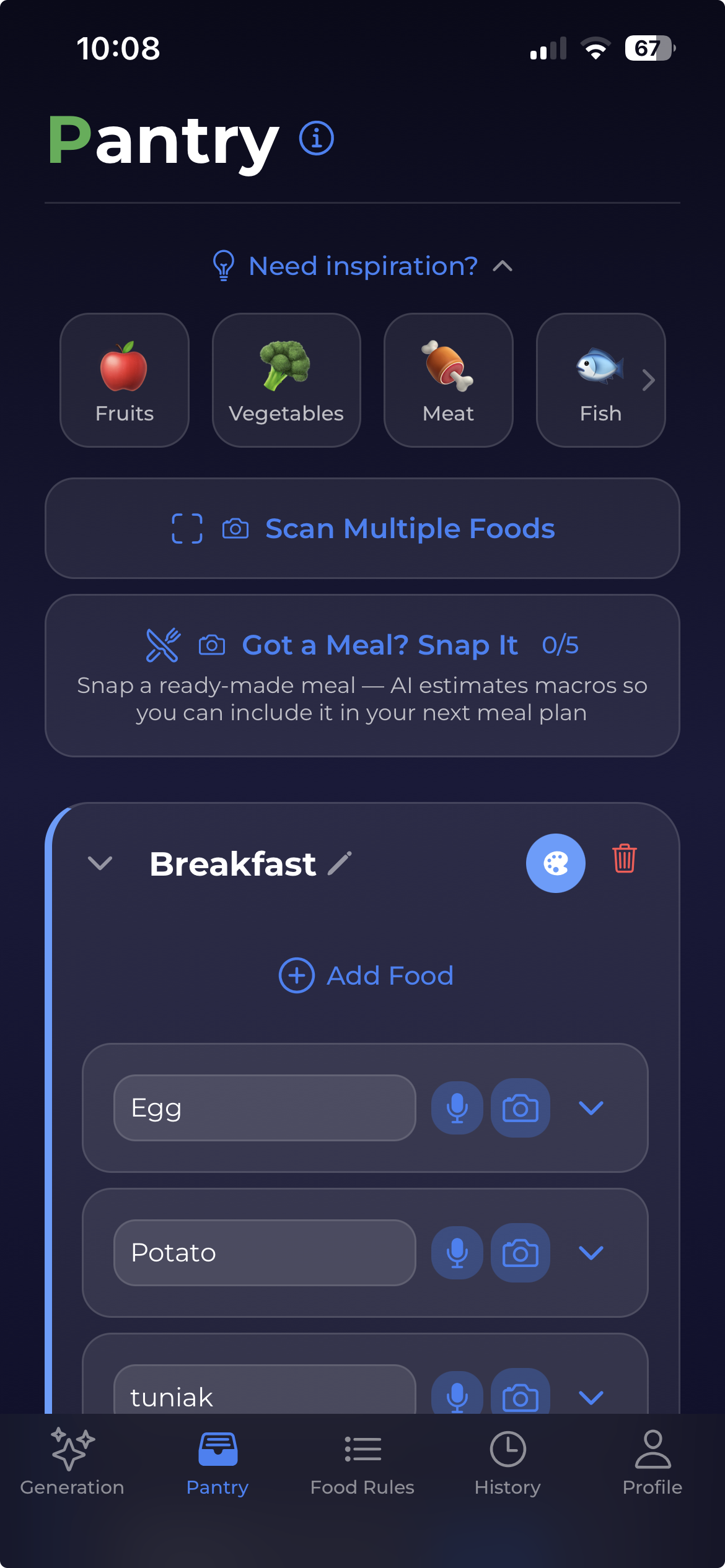
- Inventory your pantry: Add everything you already have — voice input, photo scan, or manual. This is the foundation. You will not buy groceries again until you have cooked down most of this.
- Set budget Food Rules: Create rules like "Legumes daily", "Prefer whole chicken and thighs over breast", "No more than 1 fresh fish meal per week", and "Minimum 25g protein per meal". The AI follows these rules on every plan.
- Calculate your macros: Use the built-in macro calculator to find your calorie, protein, carb, and fat targets. Budget plans typically lean higher in carbs (rice, oats, potatoes) and moderate in protein from cheap sources.
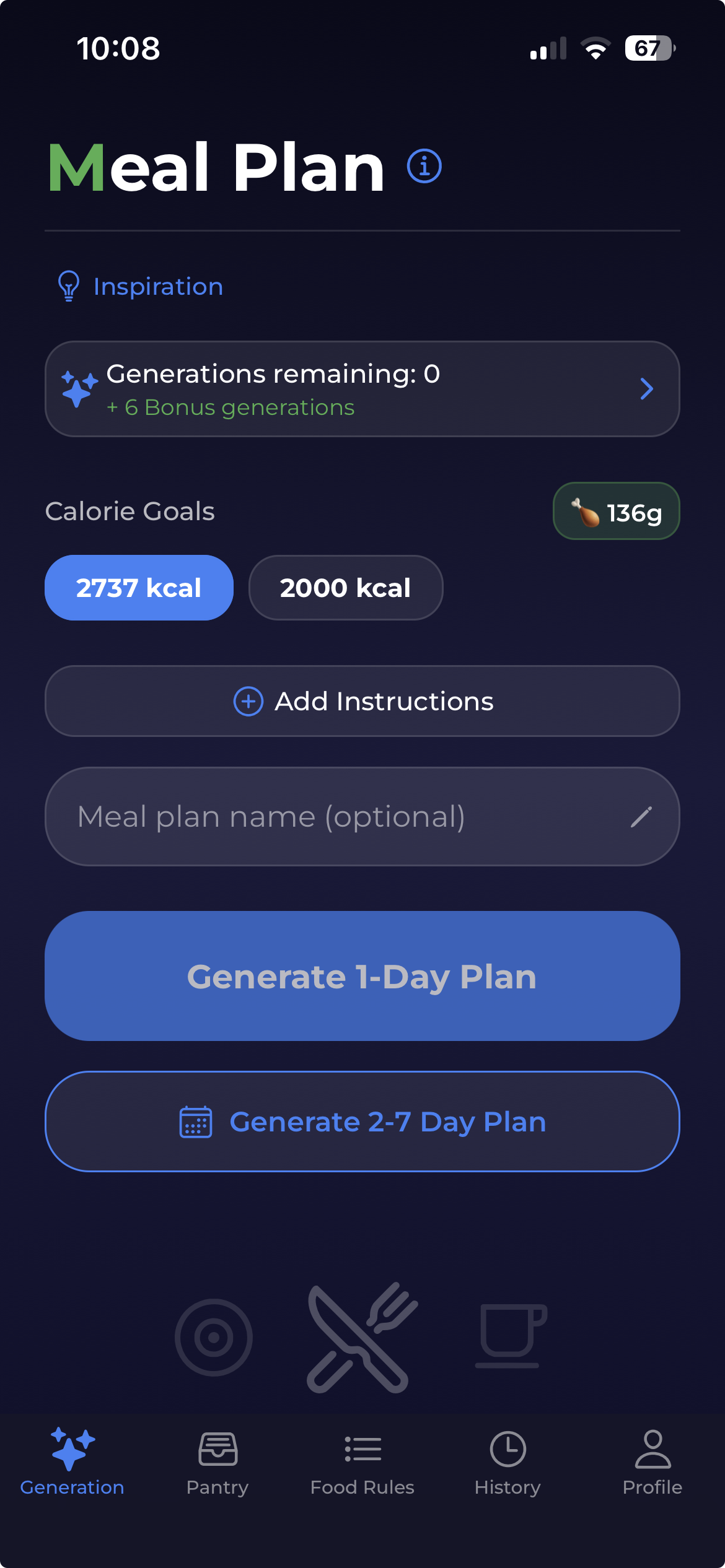
- Generate: Get a complete meal plan using strictly what you have, with exact portions and per-meal macros. Cook it down. When the pantry runs low, shop only for what the next plan actually needs.
Food Rules That Lock In Budget Eating
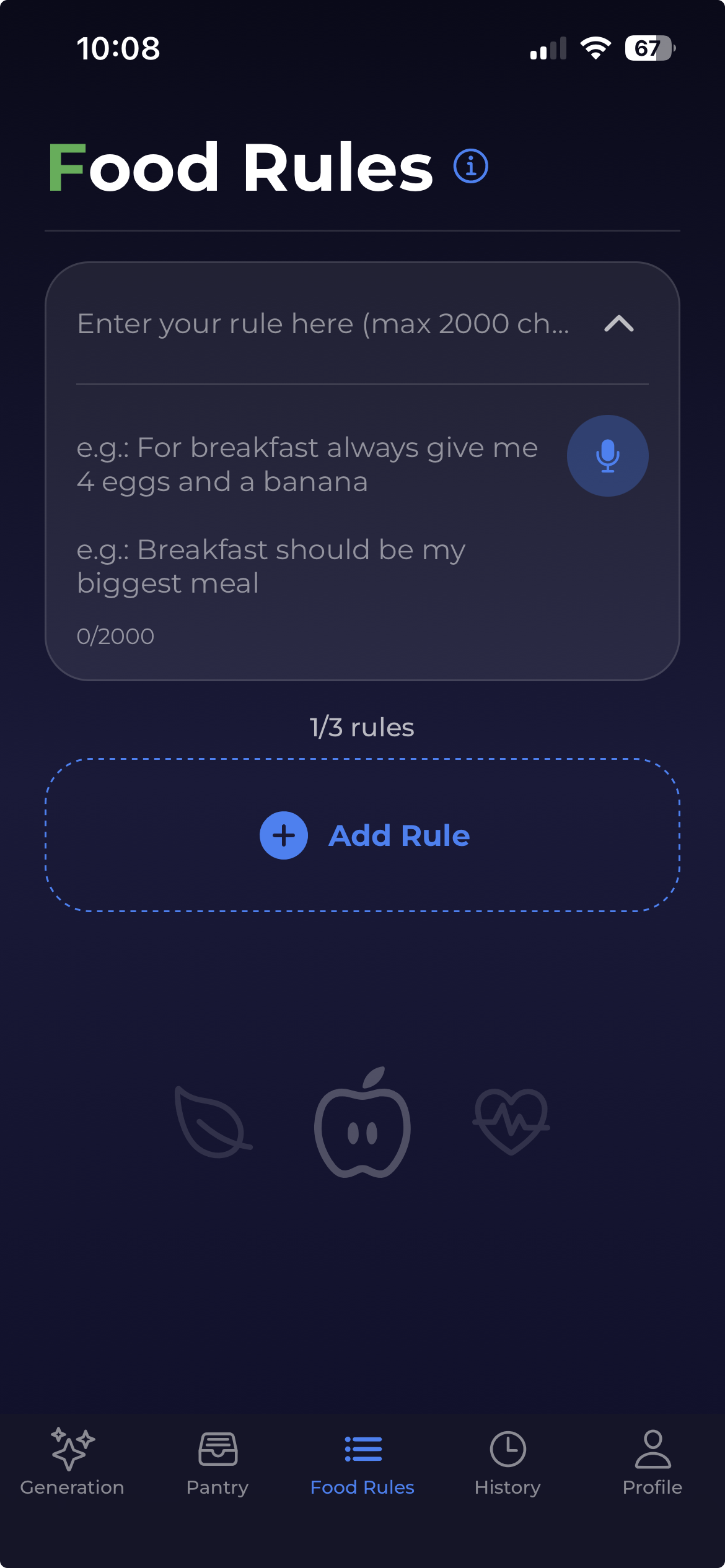
Qedamio's Food Rules are what make budget eating automatic. Set them once and every future plan enforces them:
- "Include legumes (lentils, beans, chickpeas) at least once per day" — cheapest protein source
- "Prefer eggs, chicken thighs, and canned tuna over chicken breast and steak" — cheap proteins first
- "Use rice, oats, or potatoes as the primary carb" — cheapest filling carbs
- "No pre-packaged protein bars, meal replacements, or snack packs" — removes convenience tax
- "Use frozen vegetables over fresh when not in season" — 40–60% cheaper with identical nutrition
- "Minimum 25g protein per meal" — ensures you actually hit your protein target with cheap sources
- "Cook once, eat twice — prefer recipes that yield 2+ portions" — leverages bulk cooking
- "No meal uses more than 6 ingredients" — keeps prep simple and prevents specialty shopping
You do not need all of them. Pick 3–5 that match your life. The Free tier supports 3 custom Food Rules; the Medium and Pro tiers support unlimited.
Sample $50/Week Meal Plan (2,000 kcal, 140g protein)
A realistic budget grocery list for one adult at roughly $50/week, designed to hit 2,000 kcal and 140g protein per day across 7 days:
| Item | Quantity | Approx. Cost |
|---|---|---|
| Eggs (large) | 18 | $5.50 |
| Whole chicken | 1 (~4 lb) | $7.20 |
| Dried green lentils | 1 lb | $1.80 |
| Dried black beans | 1 lb | $1.60 |
| Rolled oats | 2 lb | $3.80 |
| Brown rice | 2 lb | $3.20 |
| Potatoes | 3 lb | $2.70 |
| Frozen mixed vegetables | 2 lb | $3.60 |
| Fresh produce (onions, garlic, carrots, apples, bananas) | in season | $6.50 |
| Greek yogurt (store brand) | 32 oz | $4.50 |
| Canned tuna | 3 cans | $3.60 |
| Whole milk | 1 gal | $3.90 |
| Olive oil, spices, basics (amortized) | — | $2.00 |
| Total | ~$49.90 |
This inventory, cooked efficiently (roast the whole chicken, batch the lentils and beans, make oatmeal in bulk), supports a full week of meals at 2,000 kcal/day with 140g protein. The AI builds specific meal combinations from this list — for example a chicken and rice bowl with frozen vegetables for lunch, lentil stew for dinner, oatmeal with yogurt and banana for breakfast, hard-boiled eggs with apple as a snack. The exact portions are calculated so you do not run out early or have leftovers going bad.
Note on regional prices: This list reflects U.S. Midwest supermarket prices in early 2026. Tier 2 regions (Latin America, Southeast Asia, Eastern Europe) typically see prices 30–50% lower on staples. Urban coastal U.S. and Western Europe see 20–40% higher. The ratios and strategy still hold — legumes, eggs, and whole grains remain the cheapest protein and calorie sources anywhere.
Stop Throwing $1,500/year in the Trash
The average household wastes $1,500 of food per year. A pantry-first AI meal planner fixes the biggest grocery leak there is — unused food. Get 7 free AI meal plans and start cooking down what you already have.
Budget Meal Planning by Goal
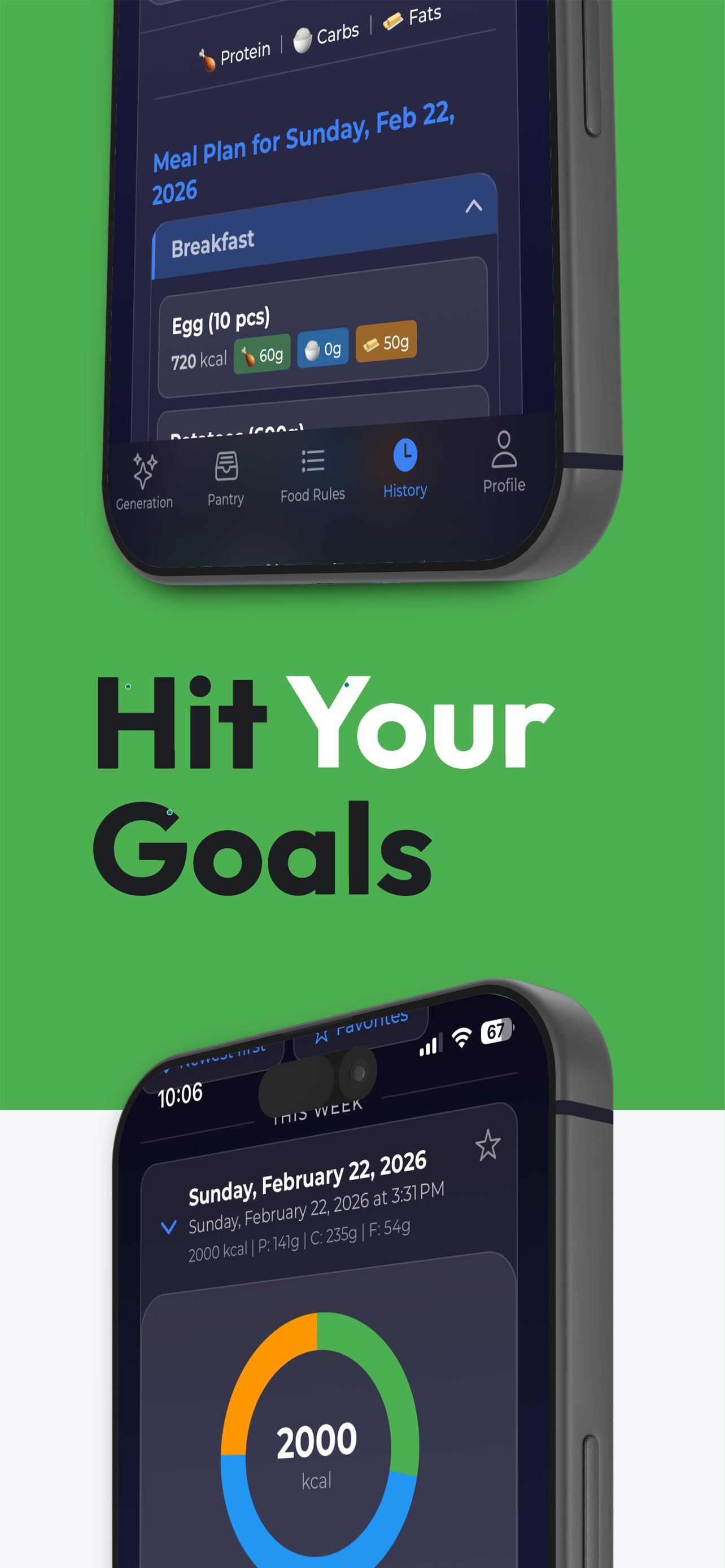
Budget Weight Loss
Budget eating and fat loss are naturally aligned — cheap foods (eggs, chicken thighs, oats, legumes, frozen vegetables) are also high-volume and high-satiety. Set a 300–500 kcal deficit below your TDEE and add a Food Rule like "Minimum 400g vegetables per day" to keep meals filling. The AI generates plans that hit the deficit using cheap staples, so you do not have to choose between your wallet and your waistline. See the full weight loss planner guide.
Budget Muscle Building
You can build muscle on under $80/week for one adult. The protein staples: eggs (cheapest complete protein per gram), Greek yogurt, cottage cheese, whole chicken, canned tuna, lentils, beans, and — if you want a supplement — whey protein powder in a 2lb tub. Aim for 1.6–2.2g protein per kg body weight in a 200–300 kcal surplus. See our bulking meal plan and muscle building planner guides. The high-protein planner handles per-meal protein distribution using cheap sources.
Budget Meal Prep
Meal prep is where budget eating wins hardest. Bulk cooking (rice, oats, legumes, roasted chicken, frozen vegetables) cuts per-meal cost by 30–40% compared to cooking daily, and eliminates takeout temptation. Generate a multi-day plan (Pro tier), get a single shopping list for the week, batch-cook on Sunday, and eat prepared meals all week. The Pro tier supports 2–7 day plans with automatic variety.
Budget for Families
Families scale budget eating differently — bulk buying becomes more efficient (a 10lb bag of rice, a whole case of canned tuna, a large whole chicken) and waste has a bigger dollar impact. The same pantry-first principle applies: inventory, plan, cook down, then shop. Families of four can realistically cut $150–300/month from grocery spending with disciplined pantry-first planning. See the weekly meal planning guide for scaling strategies.
Budget + Specific Diets
Most diet patterns have a budget version if you plan carefully:
- Budget Mediterranean: Canned sardines, dried lentils, bulk olive oil, store-brand whole wheat pasta, seasonal vegetables — not fresh salmon and imported feta. See Mediterranean planner.
- Budget Keto: Eggs, ground beef 80/20, chicken thighs with skin, cabbage, frozen broccoli, cheese on sale. Skip specialty keto snacks. See keto planner.
- Budget Vegan: Lentils, beans, tofu, rice, oats, peanut butter, frozen vegetables — vegan is naturally one of the cheapest patterns if you skip mock meats and specialty foods. See vegan planner.
- Budget High-Protein: Eggs, cottage cheese, Greek yogurt, whole chicken, canned tuna, lentils, whey powder — avoid bars and shakes. See high-protein planner.
Bulk Cooking Strategies That Save Real Money
Bulk cooking is the force multiplier on pantry-first planning. The idea: cook once, eat for 3–5 days. This is where you convert cheap raw ingredients into ready meals and break the "I'll just order something" loop that kills every budget.
Cook Once, Eat Three Times
Roast one whole chicken on Sunday — get chicken for Monday's bowl, Tuesday's soup, and Wednesday's tacos. Cook a pound of dried lentils — get 8 servings of protein. Make 1kg of rice or oats — get a week of carbs. A single hour of cooking on Sunday covers 15–20 meals.
Use the Freezer as Pantry Extension
Batch-cook and freeze in individual portions: chili, bean stew, meatballs, cooked grains, roasted vegetables, lentil curry. Frozen homemade meals cost 1/3 to 1/5 of equivalent restaurant or frozen supermarket meals with significantly better macros. The AI can generate batch-friendly meal plans that are specifically designed for freezing and reheating.
Build Around 5–6 "Hero" Ingredients Per Week
Instead of buying 30 different ingredients, rotate 5–6 cheap hero ingredients per week (say: eggs, chicken thighs, lentils, rice, oats, frozen vegetables) and combine them in different ways. This is how traditional working-class cuisines evolved — Italian cucina povera, Mexican rice-and-beans, Indian dal — all built on bulk cheap staples recombined across meals.
Buy in Bulk, But Only What You Will Actually Eat
Bulk-buying rice, oats, dried legumes, olive oil, canned fish, and frozen vegetables saves 20–40% per unit. Bulk-buying fresh produce is a trap — it spoils before you eat it, which puts you right back in the $1,500/year waste bucket. The AI helps here: it only suggests buying what the next plan will use.
Common Budget Eating Mistakes — And How AI Prevents Them
Editor's note: After reviewing thousands of "budget" meal plans from users, five failure patterns show up repeatedly. These are the real reasons budget eating fails in practice, with the fixes we have seen work.
1. Buying "Healthy" Convenience Food
Protein bars, pre-made protein shakes, meal kits, individually wrapped snacks, and "fitness" packaged food are the silent budget killer. A $3 protein bar gives you $0.30 worth of ingredients for $2.70 of packaging and marketing. The AI builds meals from whole food only — if the ingredient has a brand and a plastic wrapper, it probably should not be in a budget plan.
2. Over-Buying Fresh Produce
Fresh vegetables and fruit go bad faster than you plan for. A bag of spinach bought on Sunday turns to liquid by Friday. Frozen vegetables are 40–60% cheaper, nutritionally identical (often more nutritious, because they are frozen at peak ripeness), and never spoil. Set a Food Rule like "Use frozen vegetables when not in season" and the AI will default to them.
3. Chasing Expensive Proteins
Boneless chicken breast, salmon fillets, beef steaks, shrimp, protein powders from premium brands — these are all 2–5× the cost per gram of protein of eggs, whole chicken, lentils, and canned tuna. Switching even half your protein to cheaper sources cuts your protein spend by 40–60% with no measurable difference in outcomes.
4. Shopping Without an Inventory
Going to the store without checking what you already have leads to duplicate purchases and rotting existing food. The pantry-first workflow fixes this structurally — you inventory first, generate a plan from that inventory, and only shop for the gaps.
5. "I'll Cook Later" — The Ordering Loop
Buying raw ingredients but ordering takeout when you get hungry is the most expensive mistake. Takeout averages $15–20 per meal vs. $2–4 for equivalent home cooking. The fix is bulk cooking on a fixed day (usually Sunday) so prepared food is always available when hunger hits. The AI generates batch meal plans specifically designed for this workflow.
Key Takeaways:
• Budget eating is mostly about not wasting food you already bought — the average household throws out $1,500/year.
• The cheapest high-protein foods are lentils, beans, eggs, whole chicken, canned tuna, cottage cheese, and Greek yogurt — in that order.
• Pantry-first planning means: inventory, plan, cook down, then shop for only the gaps. This is the single biggest lever.
• Food Rules like "legumes daily", "no takeout", and "minimum 25g protein per meal" enforce budget discipline automatically.
• Realistic monthly savings: $60–150 for one adult, $150–300 for a family of four — without eating worse food.
• Bulk cooking once per week (1–2 hours) covers 15–20 meals and kills the takeout loop that destroys most budgets.
Frequently Asked Questions
How much money can meal planning actually save?
The average U.S. household wastes roughly $1,500 per year in uneaten food. Realistic meal planning savings are $60–150/month for one adult and $150–300/month for a family of four — mostly by using what you already have before buying more.
What are the cheapest high-protein foods?
In order of cost per gram of protein (cheapest first): dried lentils, dried beans, eggs, whole chicken, chicken thighs, canned tuna, cottage cheese, Greek yogurt, and rolled oats paired with milk. Skip protein bars, meal kits, boneless chicken breast, and salmon fillets — they are 2–5× more expensive per gram of protein.
How do I eat healthy on $50 per week?
A realistic $50/week for one adult covers 18 eggs, 1kg chicken thighs or a whole chicken, dried lentils, rolled oats, rice or potatoes, frozen vegetables, Greek yogurt, canned tuna, olive oil, and seasonal produce. That delivers roughly 2,000 kcal/day with 120–140g protein. See the sample plan above for the full breakdown.
Is meal prep actually cheaper than cooking daily?
Yes. Meal prep saves money three ways: bulk buying (cheaper per unit), reduced takeout (prepared food prevents the $15 lunch run), and reduced waste (portioned meals do not rot). The savings compound with a multi-day AI meal plan that generates one shopping list for the week.
Can I build muscle on a tight budget?
Yes. Muscle building needs a calorie surplus and 1.6–2.2g protein per kg body weight. You can hit both on under $80/week using eggs, milk, rice, oats, lentils, beans, chicken thighs, canned tuna, cottage cheese, Greek yogurt, and frozen vegetables. Whey protein powder is optional but cost-effective in a 2lb tub.
How does AI help save money compared to manual planning?
Three ways. First, AI uses strictly your current pantry inventory, so you cook down existing food instead of buying more. Second, it calculates exact portions to prevent over-cooking and waste. Third, it redistributes macros across cheap staples (eggs, legumes, oats) rather than defaulting to expensive options. Manual planning tends to drift toward takeout and convenience food.
How much food does the average household waste?
USDA estimates U.S. households waste 30–40% of the food supply — roughly $1,500 per family of four per year. Globally, FAO estimates household food waste at about 570 million tonnes annually. Most of the waste happens because food is bought, forgotten, and thrown out, not because it was eaten and unfinished.
What is the cheapest meal planning app?
Qedamio's Free tier includes 7 lifetime AI meal plan generations with no credit card and no trial clock. The Medium tier is $9.99/month ($6.99 in Tier 2 regions) for 31 plans/month — roughly $0.32 per plan. Most competitors charge $10–20/month with no free tier or a 7-day trial only. For occasional users, the Free tier covers the use case permanently.
Does eating cheap mean eating worse?
No. The cheapest foods are often the healthiest: eggs, oats, rice, potatoes, lentils, beans, frozen vegetables, canned fish, Greek yogurt, cottage cheese, whole chicken. What makes a diet expensive is usually processed convenience (bars, meal kits, takeout, packaged snacks) and premium animal proteins — both are also typically worse for macros and health outcomes.
References
- U.S. Department of Agriculture, Economic Research Service. "Food Waste FAQs." Accessed 2026.
- Food and Agriculture Organization of the United Nations. "The State of Food and Agriculture 2019: Moving forward on food loss and waste reduction." FAO, 2019.
- U.S. Bureau of Labor Statistics. "Consumer Expenditure Survey — Food." 2024.
- Drewnowski A, Specter SE. "Poverty and obesity: the role of energy density and energy costs." Am J Clin Nutr. 2004;79(1):6-16.
- Rao M, Afshin A, Singh G, Mozaffarian D. "Do healthier foods and diet patterns cost more than less healthy options? A systematic review and meta-analysis." BMJ Open. 2013;3(12):e004277.
- Morales ME, Berkowitz SA. "The Relationship between Food Insecurity, Dietary Patterns, and Obesity." Curr Nutr Rep. 2016;5(1):54-60.
← Back to AI Meal Planner · Related: Pantry Meal Planner · Reduce Food Waste · Meal Prep Planner · High Protein Planner · Busy People Planner · Weekly Meal Planning Guide
Disclaimer: Food prices cited in this article reflect typical U.S. Midwest supermarket prices as of early 2026 and are intended as rough benchmarks, not guarantees. Prices vary significantly by region, season, and store. Nothing in this article constitutes financial or nutritional advice. Individual dietary needs vary — consult a qualified healthcare professional or registered dietitian before making significant dietary changes, especially if you are managing a medical condition or caring for children.